Soap releases oils and picks up humidity long after it is cured — so soap boxes need the right board and coating, not just nice artwork. Here is how we spec them.
Soap is one of the hardest small products to package well. The bar keeps releasing oils, it picks up humidity from the room it sits in, and it has to survive a retail shelf or a courier van without sweating through the board. That is why soap boxes are worth thinking about properly instead of grabbing the nearest stock carton. Below is how we spec soap packaging on the floor every week — for brands running full retail lines, for makers wrapping small batches by hand, and for travel-size bars that get thrown into a gym bag.
If you already know the size and quantity you need, you can skip ahead and request a quote. Otherwise, start here.
What Makes a Good Soap Box
Three things decide whether soap packaging holds up: the board, the coating, and how much air the bar can breathe.
Cured soap still gives off moisture and fragrance oils for weeks. Wrap it in a fully laminated carton with no ventilation and the oils have nowhere to go — they migrate into the board and leave shadowy patches on your artwork. That is the most common complaint we hear about cheap soap box packaging, and it has nothing to do with print quality.
What works instead:
- 12pt to 18pt SBS or folding boxboard for retail bars. Thin enough to fold cleanly, stiff enough to hold shape when stacked.
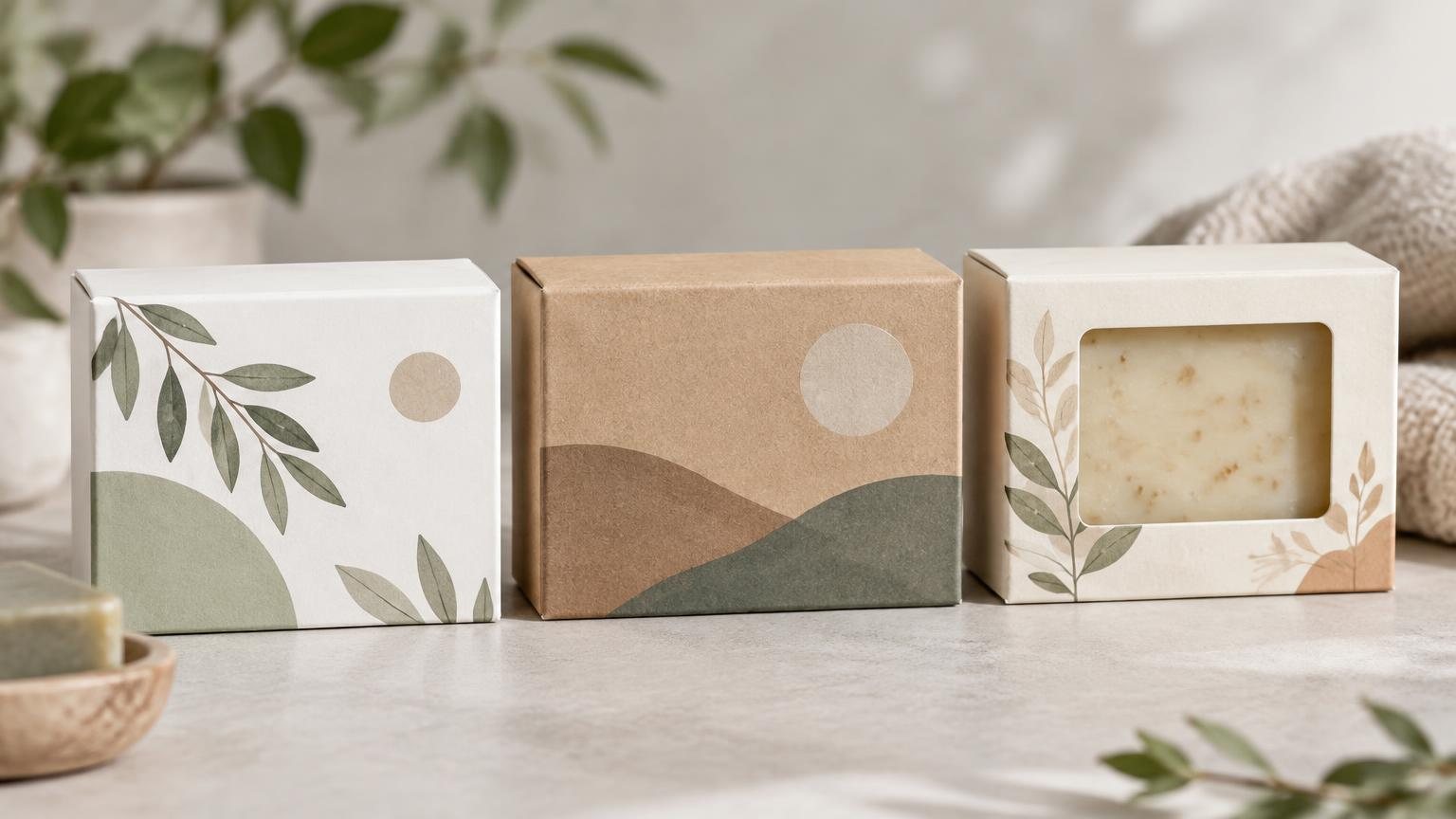
- Kraft board when you want the oils to breathe and a natural look at the same time.
- Spot coating rather than full lamination, or matte AQ over the whole box. Gloss lamination looks sharp for a week and then shows every oily fingerprint.
- A little internal clearance. Build the box 1–2mm larger than the bar on each axis so the soap slides in without scuffing the inside edges.
Humidity matters too. If you ship into Florida in July, an uncoated kraft box with no barrier will soften. In that case we usually recommend a thin shrink band or a wax paper inner wrap, with the carton doing the branding job rather than the moisture job.
Custom Soap Boxes: Branding, Printing and Low-MOQ Options
A custom soap box earns its cost in two places — the shelf and the photo. Handmade-looking bars sell on texture and story, so the box needs to show enough of both without hiding the product.
For print, CMYK offset gives you the cleanest gradients on larger runs, while digital printing makes short runs and multi-scent lines affordable because there are no plate charges. If you have six scents at 200 boxes each, digital is almost always cheaper than offset. Read more on the printing options we run if you are comparing methods.
Finishing choices that actually help soap sell:
- Soft-touch matte — reads premium, hides oil marks, feels close to the product itself.
- Spot UV or foil on the logo — a small hit of shine on an otherwise matte box does more than a fully glossy carton.
- Embossing on the brand mark — works beautifully on kraft and uncoated stocks.
We see a lot of searches for custom soap boxes with logo and for custom soap boxes no minimum. Genuinely zero-minimum printing does not exist in carton production — there is always a setup cost to cover — but our floor sits at 50 boxes, which is close enough for a first launch or a scent test. At 50 units your per-box price is higher because setup is fixed; the same artwork at 1,000 units drops sharply. If you are testing three scents, order 50 of each rather than 500 of one, then reprint the winner at volume.
Free dielines and a 3D mockup come with every quote, so you can see the unfolded flat and the finished box before anything goes on press.
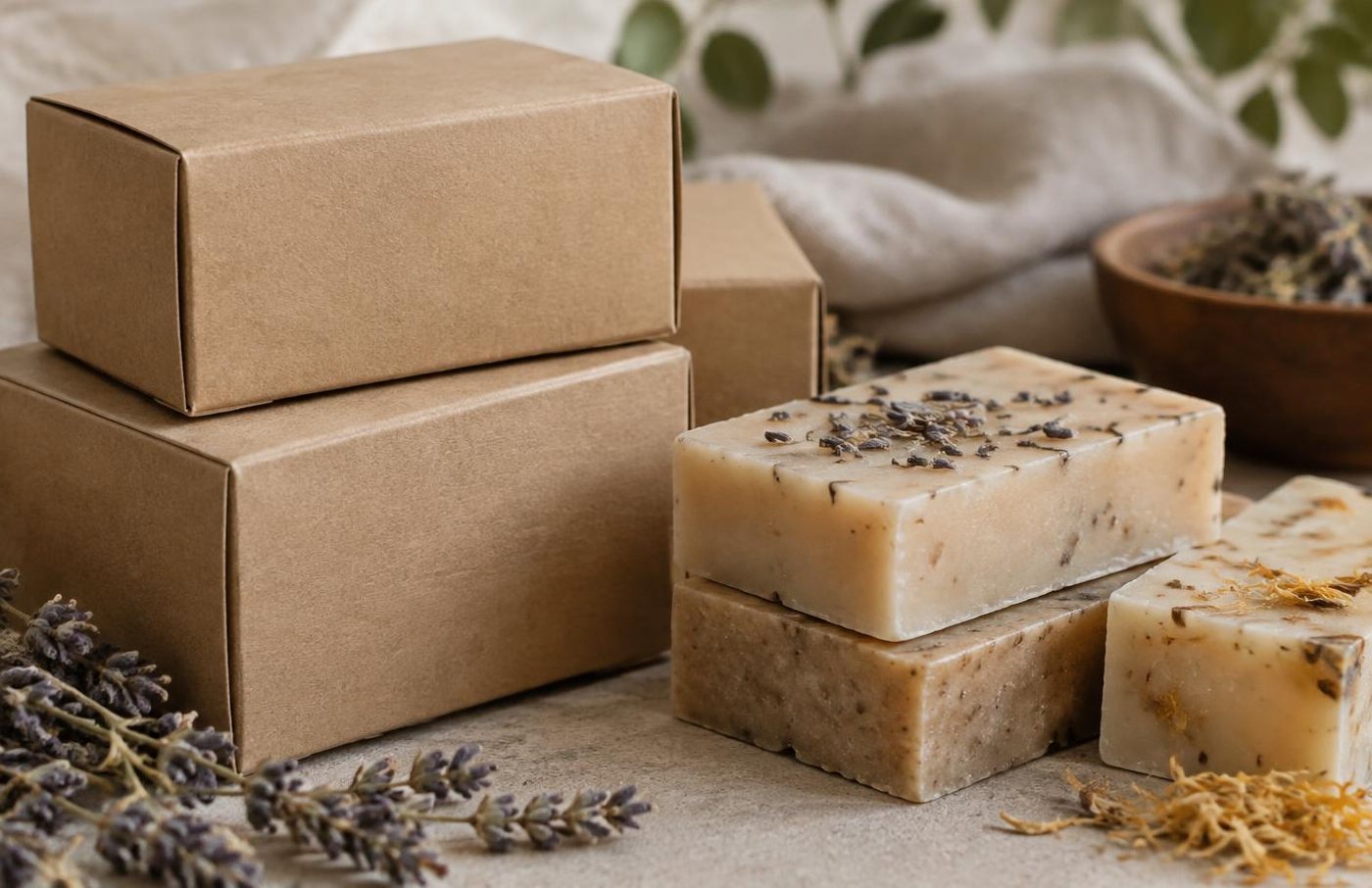
Handmade Soap Boxes for Small-Batch and Artisan Bars
Makers ask the same question in a hundred ways: how to package handmade soap so it looks finished without eating the margin on a $9 bar.
The honest answer is that you do not need much. A well-fitted carton, a clean label and a consistent size across your range will out-sell elaborate packaging almost every time. What you do need is repeatability — if every bar is cut slightly differently, no box fits well.
A few handmade soap packaging ideas that hold up in real shops:
- Sleeve plus exposed bar. A printed band around the middle, soap visible top and bottom. Cheapest option, shows texture, and buyers can smell the bar. See our soap sleeve boxes for the standard shapes.
- Kraft tuck-end carton with a stamped logo. Order plain kraft soap boxes and stamp them yourself while volumes are low, then move to printed boxes once a scent proves itself.
- Window carton. A die-cut window lets the swirl or botanical topping do the selling. Our window soap boxes use a film patch or an open cut, depending on whether you want scent to escape.
- Gift sets. Two or three bars in a rigid box moves your average order value up without new soap recipes. Luxury soap boxes cover that end of the range.
Cure the soap fully before boxing — at least four weeks for cold process. Boxing a green bar traps moisture and warps even good board.
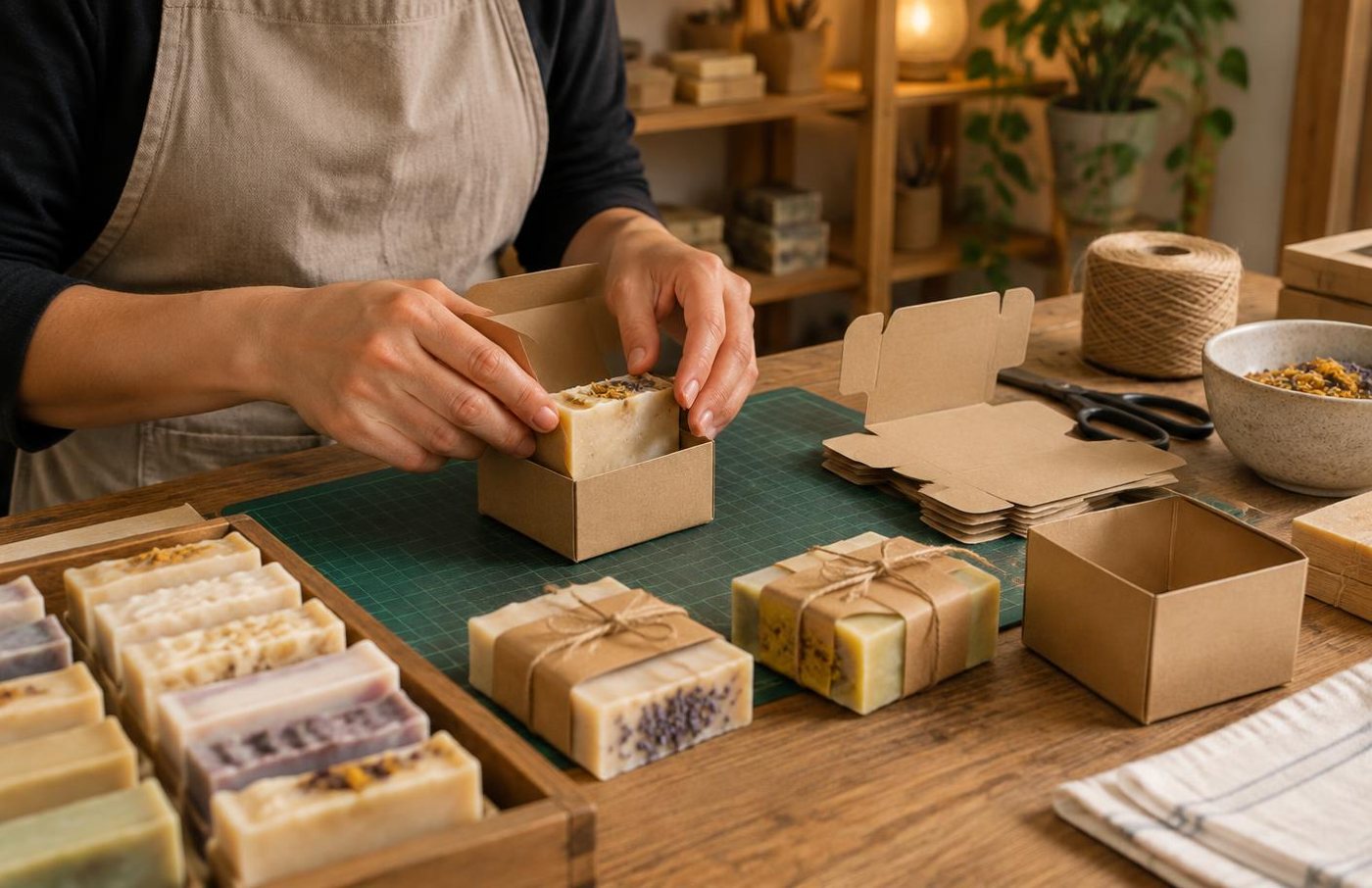
Travel Soap Boxes: Portable Packaging for Bars on the Move
Travel soap boxes solve a different problem. Here the box is not a shelf display, it is a container the customer keeps and reuses, so drainage and closure matter more than print.
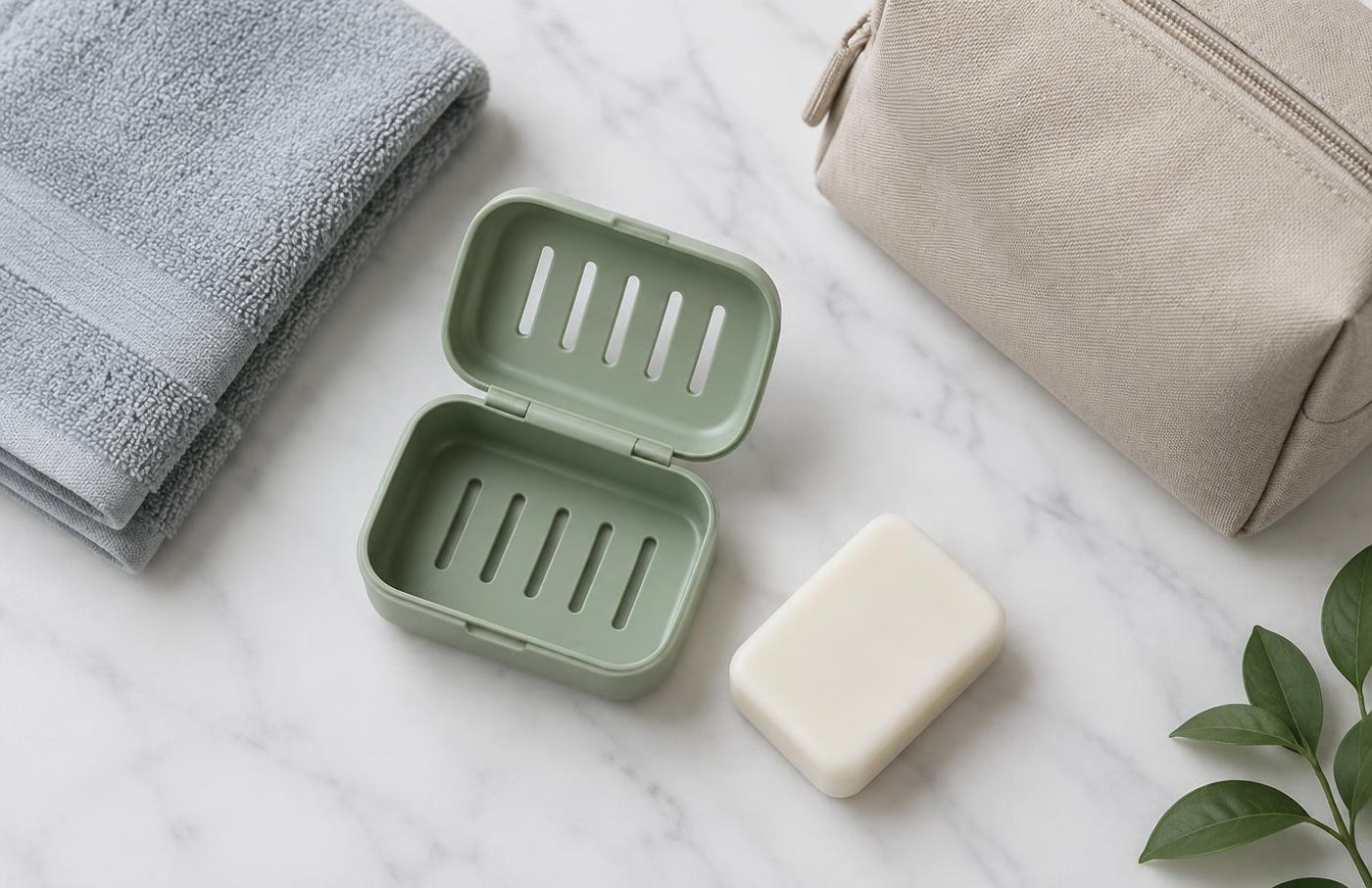
A proper travel soap container has vents or ridges in the base so the wet bar is not sitting in its own water, and a lid that stays shut in a bag. For retail, the smart move is a small rigid or tin container sold inside a printed carton — the carton carries the branding and barcode, the container travels with the customer.
For anyone wondering how to pack a soap bar for travel without a dedicated container: let the bar dry completely, wrap it in a paper towel or muslin, then seal it in a small tin or a press-lid box. Plastic bags are the worst option — the bar softens into a paste within a day. Travel sizes usually run around 2 × 1.5 × 0.75 in, which is roughly a third of a standard retail bar.
Kraft, Window and Luxury Soap Box Styles Compared
| Style | Best for | Board | Notes |
|---|---|---|---|
| Straight tuck end | Retail bars, everyday lines | 14–18pt SBS or kraft | Cheapest to produce, fast to pack by hand |
| Sleeve | Artisan and market stalls | 12–16pt | Shows the bar, minimal material use |
| Window carton | Textured or botanical bars | 16–18pt | Film patch adds cost; open window lets scent out |
| Rigid two-piece | Gift sets, premium bars | 1.5–2mm greyboard + wrap | Highest perceived value, longer lead time |
| Corrugated mailer | Direct-to-customer shipping | E-flute | Protects the retail carton in transit |
Not sure which shape fits your bar? The box styles page shows each construction unfolded, and materials breaks down board weights in more detail.
Soap Box Sizes: Getting the Fit Right
Measure the bar, not the mould. Soap shrinks as it cures, sometimes by 3–5%, so measure a bar that has finished curing and add 1–2mm of clearance per dimension.
Common starting points:
- Standard retail bar: 3.5 × 2.5 × 1 in
- Chunky artisan bar: 3.5 × 2.5 × 1.5 in
- Round or tube bar: 2.5 in diameter × 1.25 in
- Travel bar: 2 × 1.5 × 0.75 in
- Three-bar gift set: 8 × 3 × 1.5 in
Send us the bar dimensions and we will return a dieline with the clearance already built in. You can also sketch a size in the box builder and see the proportions in 3D before committing.
Where to Go From Here
If you are building a soap line, the sequence that works is simple: finalise your bar size, pick one box style across the range so your shelf looks intentional, order 50 to 100 units per scent to test, then scale the winners. Browse the full soap boxes range for shapes and stocks, or send your dimensions and quantity and we will price it both ways — short run and volume — so you can see where the break point sits.
Frequently asked questions
What are soap boxes made of?+
Most retail soap boxes are folding boxboard — 12pt to 18pt SBS for printed colour work, or kraft board when you want an unbleached natural look. Gift and premium sets use rigid greyboard with a printed wrap, and shipping cartons use E-flute corrugated.
How much do custom soap boxes cost?+
It depends on board, size, print coverage, finishing and quantity. Setup cost is fixed, so a 50-box run costs noticeably more per unit than 1,000 of the same box. Send your bar dimensions and quantity and we will quote both tiers so you can see the break point.
Are kraft soap boxes eco friendly?+
Kraft board is recyclable and widely available with recycled content, and because it breathes it suits soap well. Keep it recyclable by choosing uncoated or aqueous-coated kraft and skipping plastic lamination and foil where you can.
What size box do I need for soap?+
Measure a fully cured bar and add 1–2mm clearance on each dimension. A standard retail bar fits about 3.5 × 2.5 × 1 in, a chunky artisan bar 3.5 × 2.5 × 1.5 in, and a travel bar around 2 × 1.5 × 0.75 in.
How do you pack a soap bar for travel?+
Dry the bar completely, wrap it in paper or muslin, then put it in a vented travel soap container or a press-lid tin. Avoid sealed plastic bags — trapped moisture softens the bar within a day.
Need packaging built to this spec?
Send us your product dimensions and quantity — we'll return a free dieline, a 3D mockup and itemized pricing within 24 hours.
Request a free quote