The strongest supplement box is not the one with the most decoration. It is the one that fits the filled product, keeps important information readable, and survives the way it will actually be sold and shipped.
A supplement box has more work to do than simply look polished. It must fit the primary container, protect it through storage and shipping, organize a large amount of product information, and help a customer understand the range at a glance. When those jobs are handled in the right order, packaging becomes easier to produce and easier to use.
This guide explains how custom supplement packaging is planned, from the first bottle measurement to the final printed carton. It is written for brands selling vitamins, capsules, gummies, powders, sachets, and related wellness products through retail, subscription, and online channels.
What Is Custom Supplement Packaging?
Custom supplement packaging is secondary packaging made around a specific product rather than selected from a stock size. The structure, dimensions, board, print, and finish are chosen to suit the bottle, jar, pouch, blister, or sachet inside. A well-made carton should close cleanly, remain square on the shelf, and give every required information panel enough room.
The word “custom” covers more than printed artwork. It can include a purpose-built dieline, a locking base for extra weight, a paperboard insert that holds a bottle upright, a window placed away from a crease, or a mailer designed for a monthly bundle. These structural decisions often matter more than decoration.
Primary packaging—the bottle, jar, pouch, or blister—directly contains the product. A printed box usually acts as secondary packaging. It adds protection, creates space for instructions and product details, and gives related products a consistent retail presence. Brands planning supplement boxes should therefore begin with the filled primary container, not with a box style seen in a catalogue.
Start With the Product and Its Sales Channel
Measure a filled product whenever possible. Flexible pouches settle differently when full, jars may have a wider lid than body, and bottle pumps or caps can add unexpected height. Record the widest points of the container and allow a practical clearance so labels do not scrape against the carton.
The sales channel changes the structure too. A folding carton for a pharmacy shelf needs a strong front panel, clean edges, and dependable stacking. A direct-to-consumer order may need a corrugated outer mailer, cushioning, or an insert because parcel networks expose it to drops and compression. A subscription kit must also be easy to pack repeatedly without confusing the fulfillment team.
Before choosing a structure, answer these questions:
- What are the exact filled dimensions and weight of the primary container?
- Will the box hang, stand, stack, or ship inside another carton?
- Does it hold one item, a multi-pack, or a bottle with an accessory?
- Which panels need product facts, directions, warnings, batch details, or a barcode?
- Will a leaflet, scoop, dropper, or sample sachet sit inside?
- Is the pack assembled by hand or on an automated line?
Clear answers prevent a common mistake: designing attractive artwork first, then discovering that the structure has too little room for the information or product.
Common Supplement Packaging Formats
There is no single best box for every supplement. The useful choice is the one that protects the format without adding unnecessary material or packing time.
Folding cartons for bottles and jars
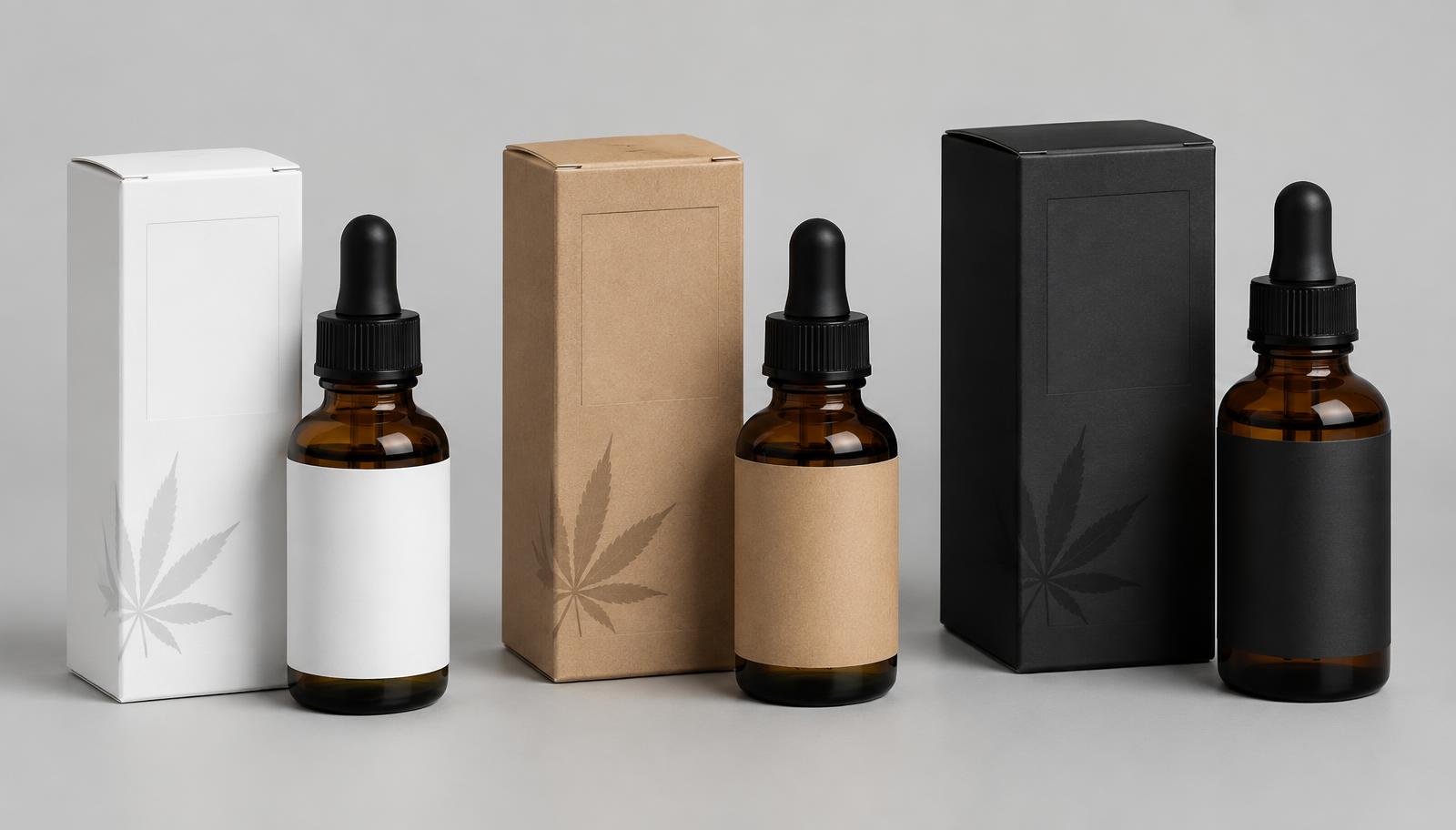
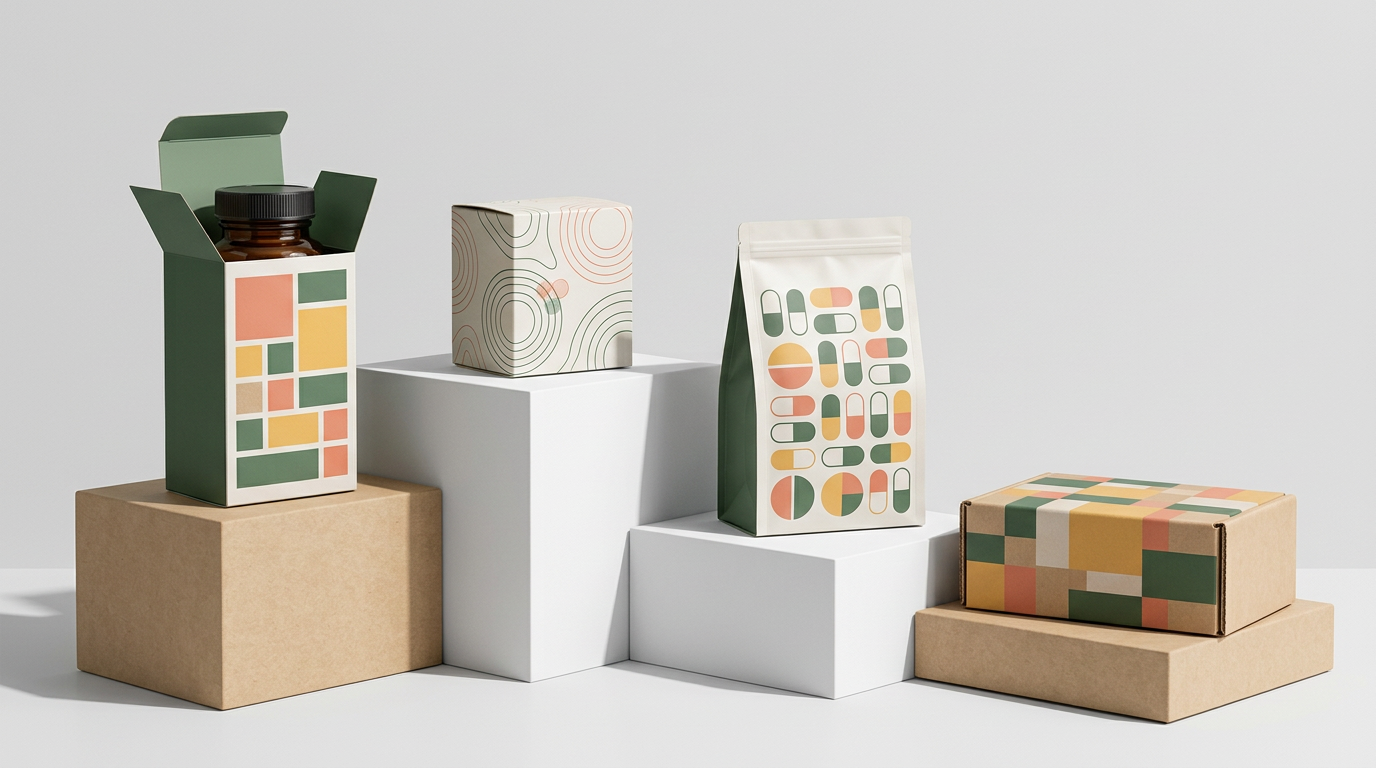
Straight-tuck and reverse-tuck cartons are familiar, economical, and easy to store flat. They work well for capsule bottles, vitamin jars, tinctures, and small tubs. Larger gummy jars may require heavier paperboard to stop broad panels from bowing. Auto-lock or snap-lock bottoms add support where the filled product carries more weight.
Boxes for pouches, powders, and sachets
A pouch may need a carton for retail display even when the pouch itself already provides the product barrier. The carton should be measured around a filled pouch because powders change its shape. Individual stick packs or sachets can be packed in a dispenser carton, a divided carton, or a compact mailer depending on count and how the customer removes each serving.
Blister, vial, and multi-product packs
Blister cards benefit from locating tabs that stop movement. Vials and small bottles often need dividers so glass does not touch glass. A daily regimen, trial set, or bundled product can use a paperboard insert to present every item in a clear order. These formats take more structural work, but the result is faster packing and a neater opening experience.
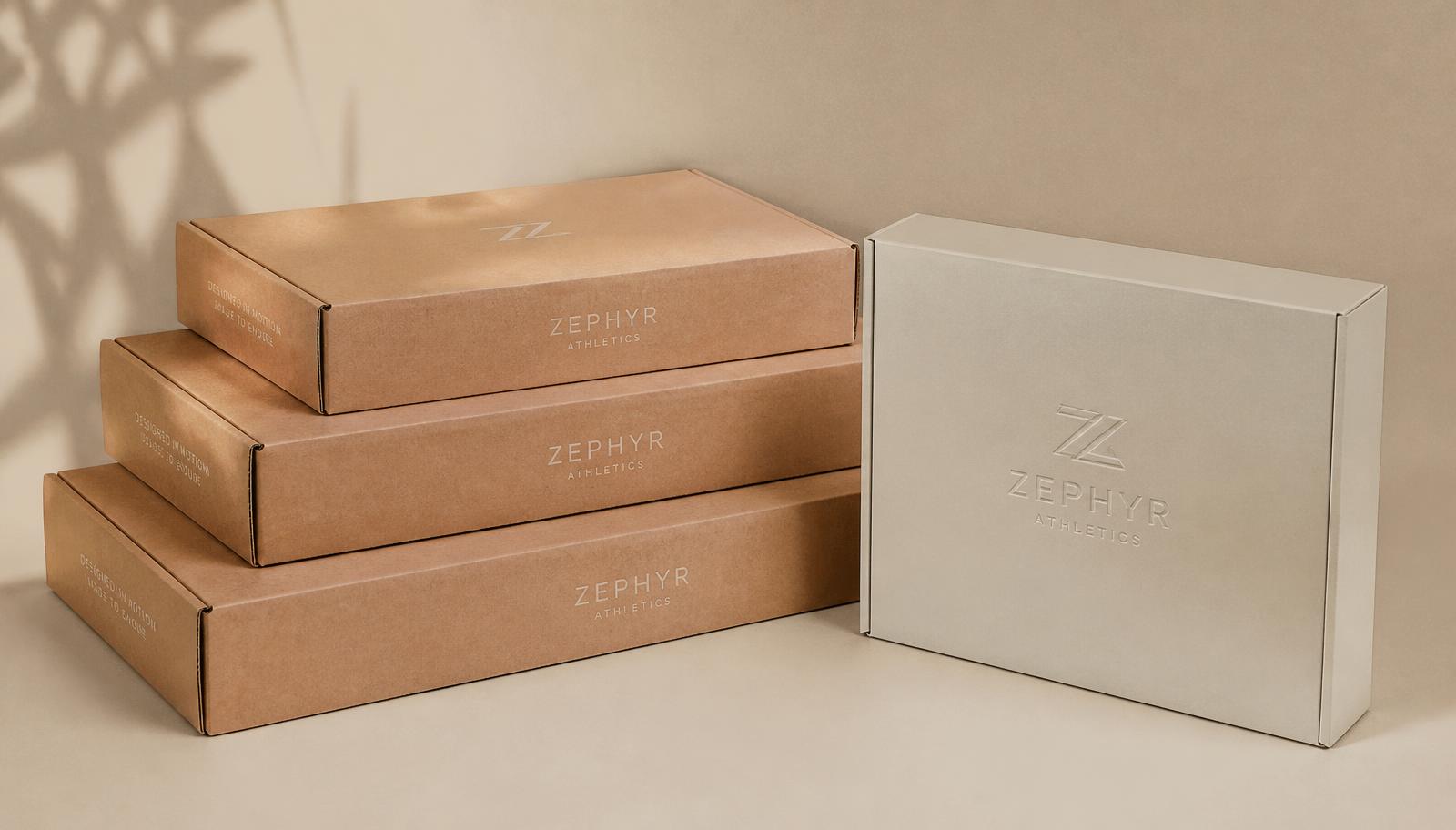
Rigid boxes and corrugated mailers
Rigid boxes suit premium sets, gifts, or influencer kits where presentation is part of the product experience. They take more space and usually cost more than folding cartons, so they should serve a clear purpose. Corrugated mailers are better suited to ecommerce transport. They can hold one retail carton or a complete bundle while protecting corners in transit.
For a wider comparison of structures, the box styles guide explains how tuck cartons, mailers, sleeves, and rigid formats behave.
Choosing the Right Packaging Material
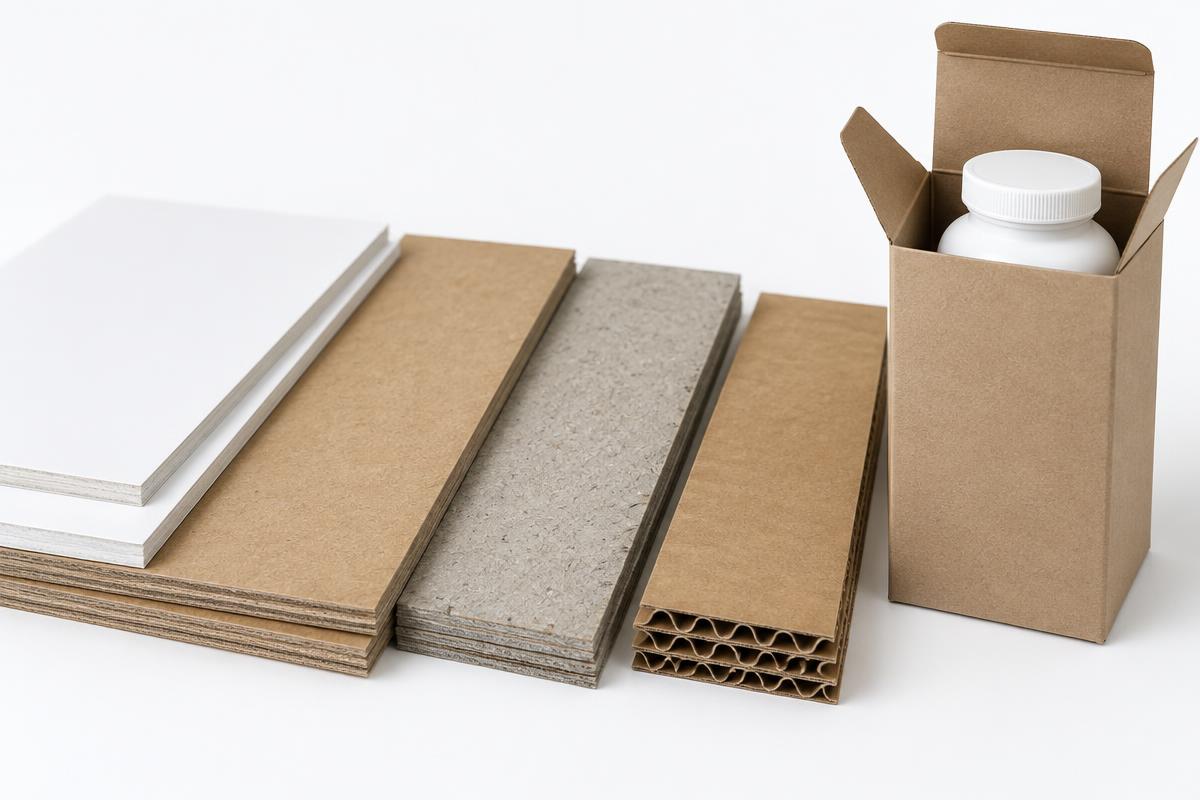
Material affects print quality, stiffness, recyclability, weight, and cost. The best choice follows the product and channel rather than a trend.
| Material | Best suited to | Practical consideration |
|---|---|---|
| SBS paperboard | Vitamins, capsules, gummies, retail cartons | Smooth surface supports crisp type and detailed color |
| Folding boxboard | Larger jars and broader carton panels | Added stiffness helps the pack remain square |
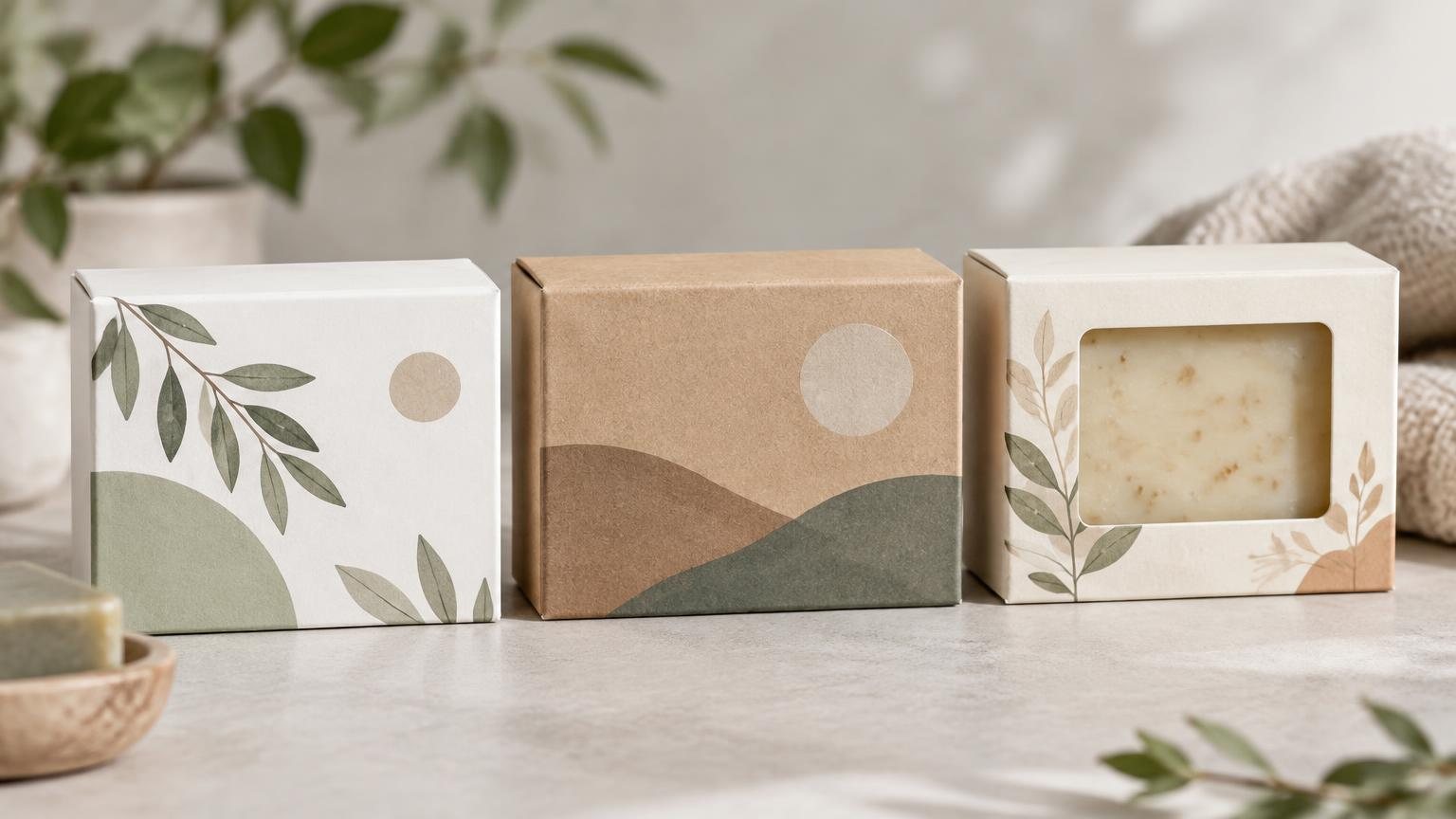
| Kraft paperboard | Natural-positioned products and simple graphics | The brown surface changes printed color and fine type needs care |
| Recycled paperboard | Brands prioritizing recycled content | Surface shade and texture may vary more than virgin white board |
| Fine-flute corrugated | Heavy powders, bundles, and ecommerce | Stronger in transit but thicker than folding carton stock |
| Rigid greyboard | Premium kits and presentation sets | Durable and substantial, but uses more material and shipping space |
SBS is a dependable choice when the design contains small text, bright color, or clean photography. Kraft creates a warmer, uncoated appearance, although pale inks and fine detail do not behave as they do on white coated stock. Corrugated board is useful when loaded weight or parcel handling is the main concern.
Do not select board thickness by feel alone. Panel size, grain direction, product weight, closure style, and insert design all contribute to strength. A small bottle carton and a large powder pouch carton can use entirely different specifications even when both belong to the same brand. The packaging materials guide provides more detail on paperboard and corrugated choices.
Supplement Packaging Inserts and Product Protection
An insert is useful when empty space allows the product to move, rotate, or strike another item. It can also improve presentation by positioning the label toward the opening. Paperboard inserts are commonly die-cut, folded, and locked into place without permanent plastic parts.
A simple neck support may be enough for one bottle. A jar can use a raised platform with side walls. Multi-bottle sets need partitions or separate cavities, while a bottle-and-dropper kit may require two differently shaped cutouts. The insert should hold the product securely without making removal awkward.
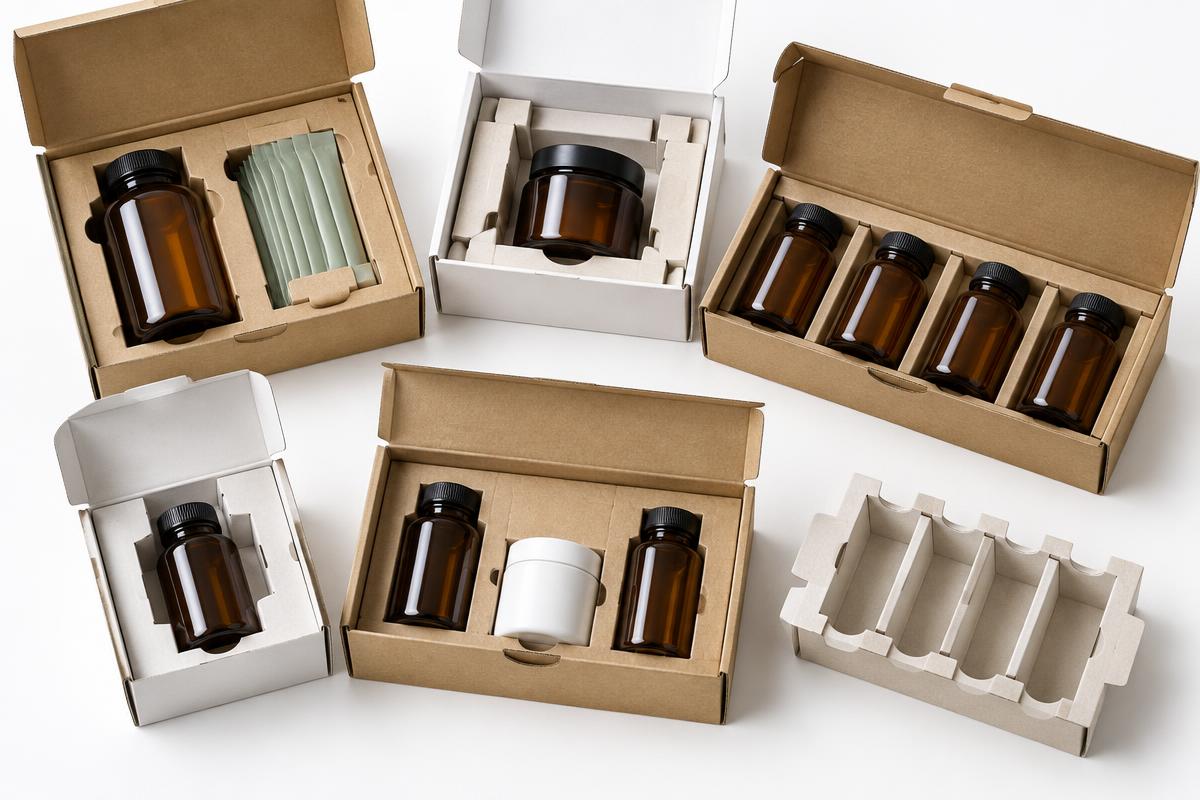
Ask for a physical fit test before approving a large order, particularly when the container is glass, unusually shaped, or supplied by more than one manufacturer. Small variations in cap diameter or jar shoulder can affect fit. A prototype also reveals whether assembly takes too long or whether a tab blocks important artwork.
Avoid adding an insert only to make a box feel fuller. Reducing the outer carton size is often a better answer. Less empty space can lower material use, improve shipping efficiency, and make the product feel more intentional.
Supplement Packaging Design That Reads Clearly
Effective supplement packaging design separates information into a clear order. The front panel usually needs the brand, product name, format, count or weight, and the most important differentiator. Side and back panels can carry directions, ingredient information, storage details, warnings, company details, and other required copy.
Start with a copy deck before styling. Place every approved line of text into the dieline and reserve space for variable details such as lot or batch information and expiry coding. Keep barcodes and scannable codes away from folds, glue areas, and heavy texture. If legal or regulatory review is required, complete it before final print approval. A packaging printer can prepare space and reproduce approved artwork, but the brand remains responsible for confirming the claims and information required in its market.
Useful design habits include:
- Build one consistent hierarchy across the full product family.
- Give flavors, strengths, or counts an obvious but controlled distinction.
- Test small text at printed size, not only on a large monitor.
- Maintain strong contrast between copy and background.
- Leave a clear area for batch and expiry overprinting.
- Check every panel after the dieline is folded into a 3D mockup.
- Make the front panel understandable in a small ecommerce thumbnail.
Typography that looks generous on screen can become cramped on a narrow side panel. Kraft and other absorbent stocks may also make very small type appear softer. A printed proof is more reliable than judging color and legibility from a backlit display.
Printing and Finishing Choices
Offset printing is well suited to detailed artwork and consistent color across a larger run. Digital printing can be practical for shorter quantities or versions, depending on the structure and specification. Pantone references are useful when several flavors or strengths must share a stable brand color, while CMYK handles photographs and broad color ranges.
Finishes should support the design rather than cover every surface. Matte or gloss coatings alter feel and protect print. Foil can highlight a small mark or product line. Embossing creates a raised detail, and spot gloss adds contrast against a matte background. Too many effects can compete with essential information and increase production steps.
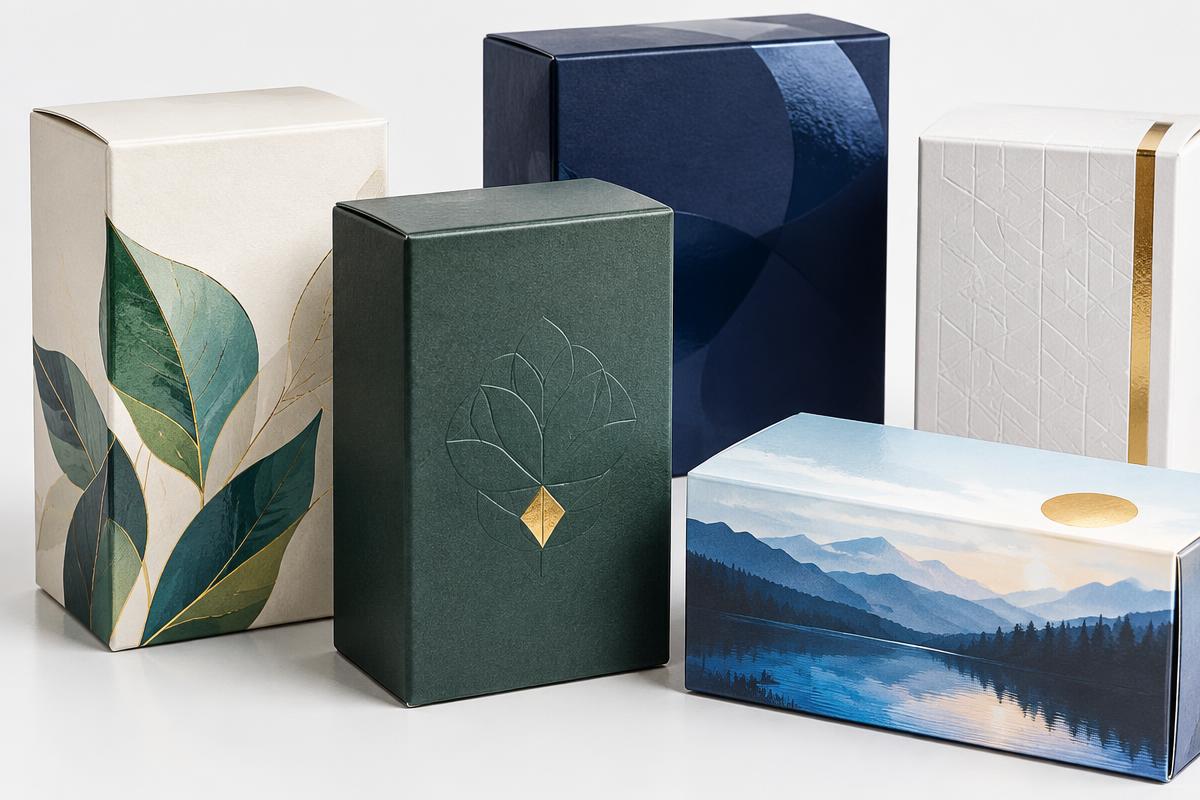
When comparing printing options and finishing choices, consider handling as well as appearance. A finish that looks good on a retail carton may be unnecessary beneath an outer mailer. If the pack needs a writable or scannable variable-data area, leave that patch free from coatings that interfere with the chosen coding method.
Sustainable Supplement Packaging Without Vague Claims
Sustainability works best when it is tied to specific decisions. A right-sized carton, a recyclable paperboard insert, and reduced plastic lamination are clearer improvements than an unsupported “green” label. Recycled and responsibly sourced paper options may be available, but availability and certification should be confirmed for the exact board used on the job.
Kraft is not automatically the lowest-impact option, and a white carton is not automatically wasteful. Compare recycled content, fiber source, print coverage, coatings, insert material, pack weight, and the recycling system available to the customer. Removing excess space can also reduce the size of shipping cartons and the amount of void fill required.
If environmental positioning is important to the brand, document the material specification and write claims narrowly. The sustainable packaging overview covers practical choices without relying on broad promises.
Wholesale Quantities, Cost, and Production Planning
The price of custom supplement packaging boxes depends on the finished size, material, structure, print coverage, finishes, inserts, quantity, sampling, and delivery point. A small plain folding carton is a different production job from a rigid presentation set with multiple cavities. For that reason, a useful quote begins with complete specifications rather than a price copied from an unrelated size.
Quantity affects unit cost because setup work is spread across the run. Ordering too much, however, can create obsolete packaging if the formula, label copy, or brand system changes. New brands often benefit from a controlled first run, followed by a larger reorder once fit, packing speed, and customer response are known. PackologyPro starts many folding-carton projects at 50 boxes, while the suitable minimum can vary by structure and finish.
A clear quote request should include:
- Product type and filled dimensions
- Required quantity and number of versions
- Preferred box style and material, if known
- Artwork status and desired print finish
- Insert or divider requirements
- Delivery city, country, and required date
- Reference photos or an existing sample, where helpful
Standard production timing should be counted after artwork and structural approval, not from the first enquiry. Build time for proofing, changes, packing, and freight into the launch calendar. Brands purchasing wholesale supplement packaging should also plan reorder points around sales velocity rather than waiting until finished stock is nearly gone.
A Practical Ordering Process
Ordering custom supplement boxes becomes straightforward when decisions are made in sequence:
- Measure the filled product. Record length, width, height, cap, shoulder, and total weight.
- Define the channel. Note whether the pack is for retail, ecommerce, subscription, wholesale distribution, or a mix.
- Choose the structure. Select a folding carton, mailer, sleeve, rigid box, or multi-product format.
- Select material. Balance stiffness, print needs, shipping conditions, and sustainability goals.
- Plan protection. Decide whether the product needs an insert, divider, or stronger outer shipper.
- Prepare the dieline. Place approved copy and artwork on the exact structural template.
- Review the proof. Check spelling, panel order, barcode areas, color references, and finishing positions.
- Test a sample. Confirm fit, closure, stacking, removal, and pack-out time.
- Approve production. Sign off the final specification, quantity, delivery details, and schedule.
- Keep the approved specification. Use it to make reorders consistent and record any changes by version.
The online box builder can help organize early choices, while a formal quote confirms the structure, production details, and delivered price.
Common Mistakes to Avoid
Using empty-container measurements. A filled pouch or assembled accessory kit can occupy more space than expected.
Treating every SKU as a separate design. Product families are easier to recognize when the layout stays consistent and only key identifiers change.
Leaving information until the end. Required copy rarely fits gracefully when it is added after the visual design is finished.
Choosing finishes before material. Foil, embossing, coatings, and fine print behave differently across coated, uncoated, and textured stocks.
Ignoring the shipping carton. A beautiful retail box still needs protection when sold online. Test the entire packing system, not only the carton on a desk.
Skipping a physical sample. A screen proof cannot show grip, stiffness, closure resistance, product movement, or packing speed.
Making broad environmental or compliance claims. Use language that can be supported by the actual material and reviewed product information.
Build Packaging Around the Real Product
Good packaging for supplements is the result of measured choices. Start with the filled container and the way it will be sold. Give the information hierarchy enough space, choose material for the actual load, and add inserts or finishes only where they solve a problem. That process produces a carton that looks considered because it works properly.
Whether the project is a first run of vitamin packaging boxes or a coordinated range of capsules, gummies, and powders, a clear brief makes quoting and proofing faster. To discuss dimensions, quantities, materials, or delivery, request a free packaging quote. PackologyPro can prepare a dieline and 3D mockup so the structure and artwork can be reviewed before production.
Frequently asked questions
What is custom supplement packaging?+
It is packaging designed around a specific supplement product, container and sales channel. The dimensions, structure, material, printing and optional insert are tailored rather than taken from a fixed stock size.
Which box material is best for supplements?+
SBS paperboard suits crisp retail printing, kraft supports a natural uncoated look, and corrugated board adds strength for heavier products or ecommerce. The correct choice depends on product weight, panel size, print detail and shipping conditions.
Do supplement bottles need box inserts?+
Not always. An insert is useful when a bottle can move, rotate, strike another item or needs a controlled presentation. A close-fitting carton may not require one.
How is the cost of custom supplement boxes calculated?+
Cost depends on finished dimensions, board, structure, quantity, print coverage, finishes, inserts, sampling and delivery. Accurate product measurements and a complete specification are needed for a useful quote.
What should I provide when ordering supplement packaging?+
Provide the filled product dimensions and weight, quantity, number of versions, preferred structure and material, artwork status, insert needs, delivery location and required date.
Can supplement packaging be recyclable?+
Many folding cartons and paperboard inserts can be designed for paper recycling, subject to the exact stock, coatings, adhesives and local collection rules. Right-sizing and avoiding unnecessary mixed materials also help.
Should I approve a sample before production?+
Yes, especially for bottles, jars, pouches, glass containers and multi-item sets. A physical sample helps confirm fit, closure, stacking, product removal and packing time.
Need packaging built to this spec?
Send us your product dimensions and quantity — we'll return a free dieline, a 3D mockup and itemized pricing within 24 hours.
Request a free quote