Choose the fit and board first. Then check the logo proof and the full delivered cost before you approve a printed box order.
A box can look great on a screen and still cause trouble at the packing table. The lid may not close. A logo may land on a fold. A glass jar may slide from side to side. Good packaging starts with those small details, not just the print.
Custom printed mailer boxes are fold-up boxes with your artwork printed on the board. They often have a hinged lid, front tuck and side flaps. For US shops that send small goods, they can bring product protection and clear branding into one pack. But the board, fit and closure must match the goods inside.
This guide explains how to choose a box, prepare a logo and compare quotes. It also covers what to check before buying 2,000 boxes. The aim is simple: help you order a pack that works, without paying for extras you do not need.
When a Printed Mailer Box Makes Sense
Mailer boxes suit many small online orders, gift kits and monthly sets. A neat, flat top gives you room for a logo. The lid creates a clear opening point, and the box can usually arrive flat for storage.
Start with your goods and shipping route. A shirt needs different support from a candle jar. A skincare kit needs space for more than one item. Heavy or fragile goods may need inserts, stronger board or an outer shipping carton.
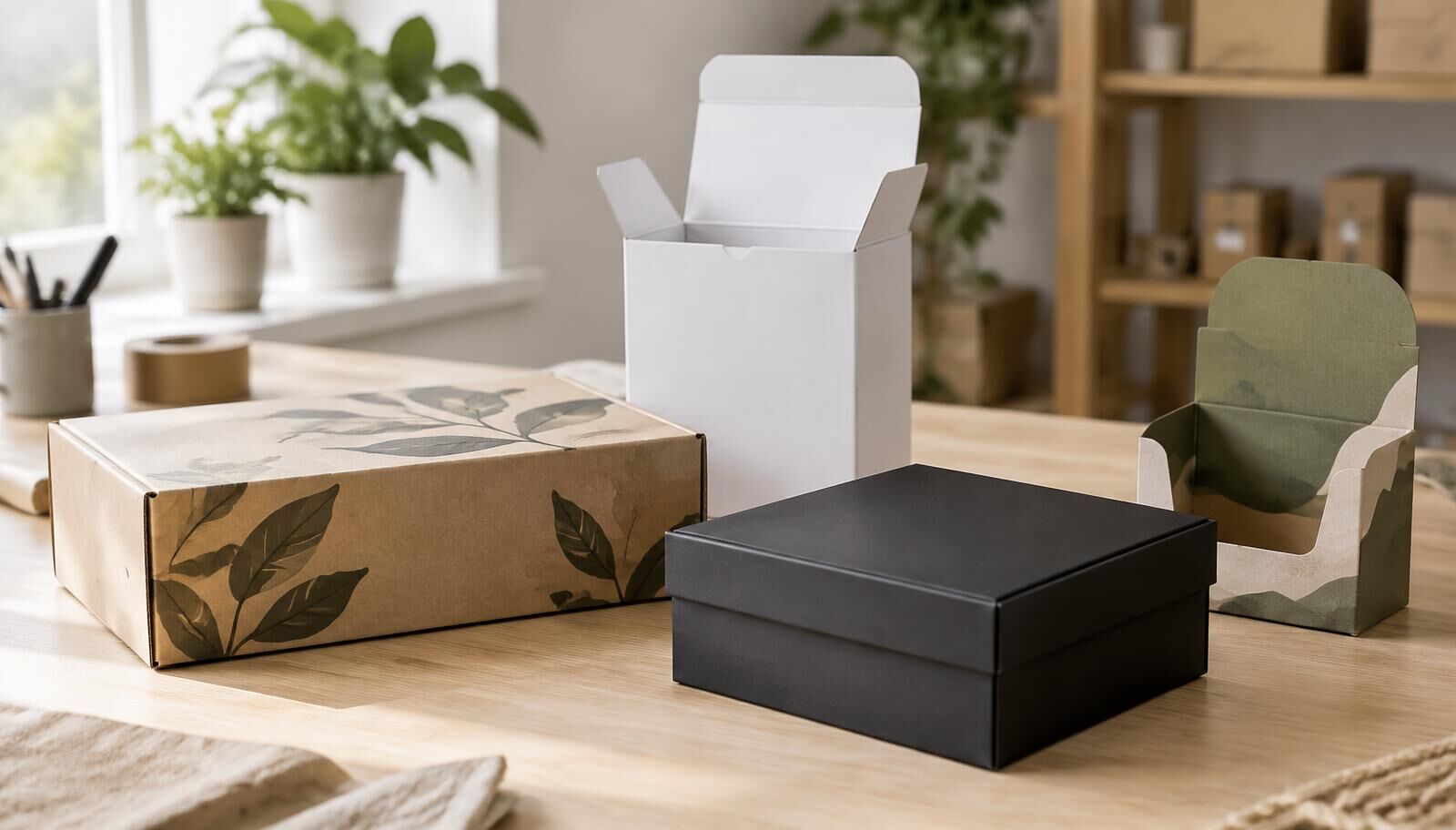
Browse custom mailer boxes to see the wider category. Choose a printed version when brand marks or product notes need to be part of the box itself. A plain box with a label may still be the better choice for a short test run or a range that changes each week.
Print does not make a box stronger. The structure and packed-product tests do that work.
Choose the Board Before the Artwork
People use “cardboard” for several materials. Thin paperboard and corrugated board are not the same. Corrugated board has a wavy layer between liners. That layer helps create a firm box without making every wall solid and heavy.
For custom printed mailer cardboard boxes, ask which board is included in the quote. Do not stop at “premium cardboard.” Get the liner type, flute and strength details in writing. Also share the packed weight and any fragile parts.
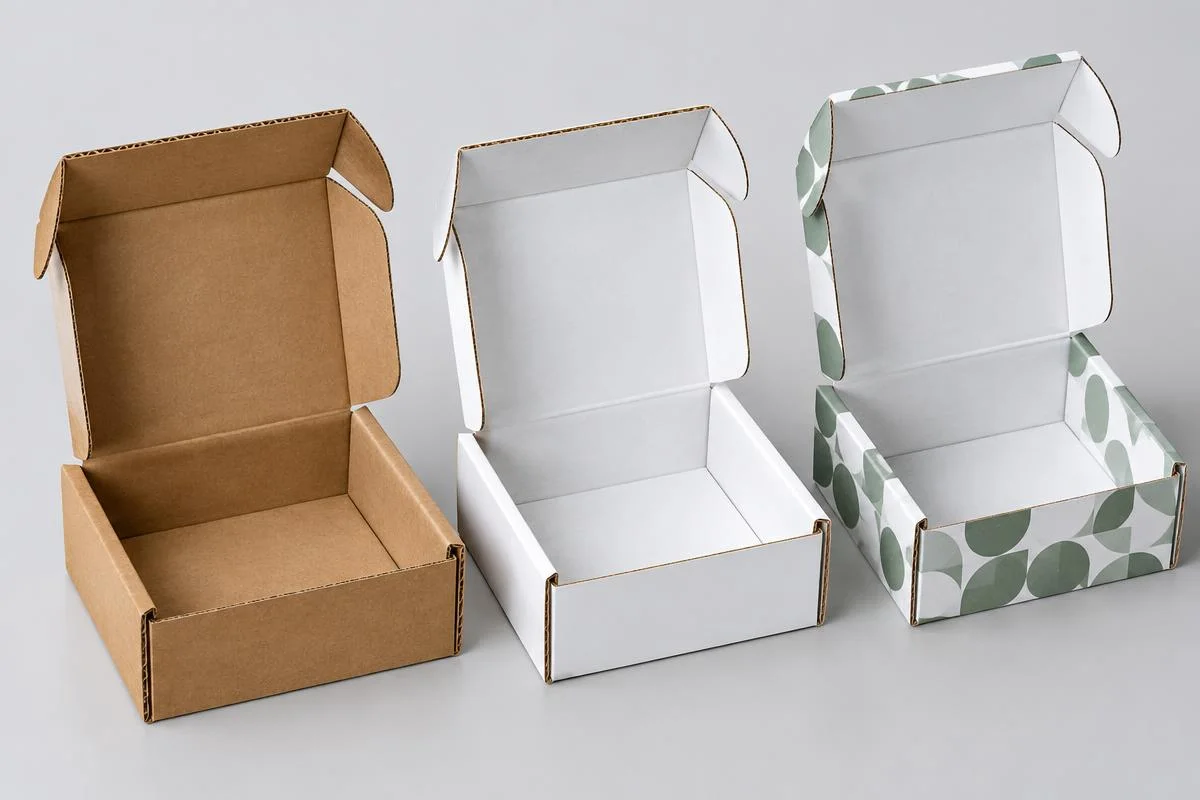
Kraft or White: What Changes?
Kraft has a brown base. It suits dark logos and simple line art. White board gives light colors and photos a different starting point. A pale brand color can look duller on brown stock than on a white liner.
Ask to see print on the actual stock, not just a screen image. If white ink or a special coating is needed, check whether the printer offers it and whether it changes the price.
| Choice | Often suits | Check before ordering |
|---|---|---|
| Kraft corrugated board | Dark logos and simple art | Color contrast on the brown base |
| White corrugated board | Color-rich designs and light brand marks | Actual print color and rub marks |
| A heavier board specification | Heavier packs or tougher routes | Fit, folded bulk and packed testing |
| Thin paperboard | Light retail cartons | Whether an outer shipping pack is needed |
Our packaging materials guide gives more context. For a pack where board structure is the main concern, also look at corrugated mailer boxes.
Get the Size Right With the Full Pack
Measure all the items as they will sit in the box. Include jars, caps, tissue, cards, inserts and any wrap. A product size on a supplier sheet is not always the size of the finished gift set.
Use inside dimensions for product fit. Ask the maker to confirm how length, width and depth are defined on the drawing. Do not mix inches and millimeters in the same brief. For a US order, inches may be easiest for your team, but clear units matter more than the choice itself.
Then check the outside dimensions of the closed pack. Carriers can price parcels using dimensional weight as well as actual weight. The method and rate depend on the carrier and service. A little less empty space can matter across many shipments; check current rules with your shipping provider.
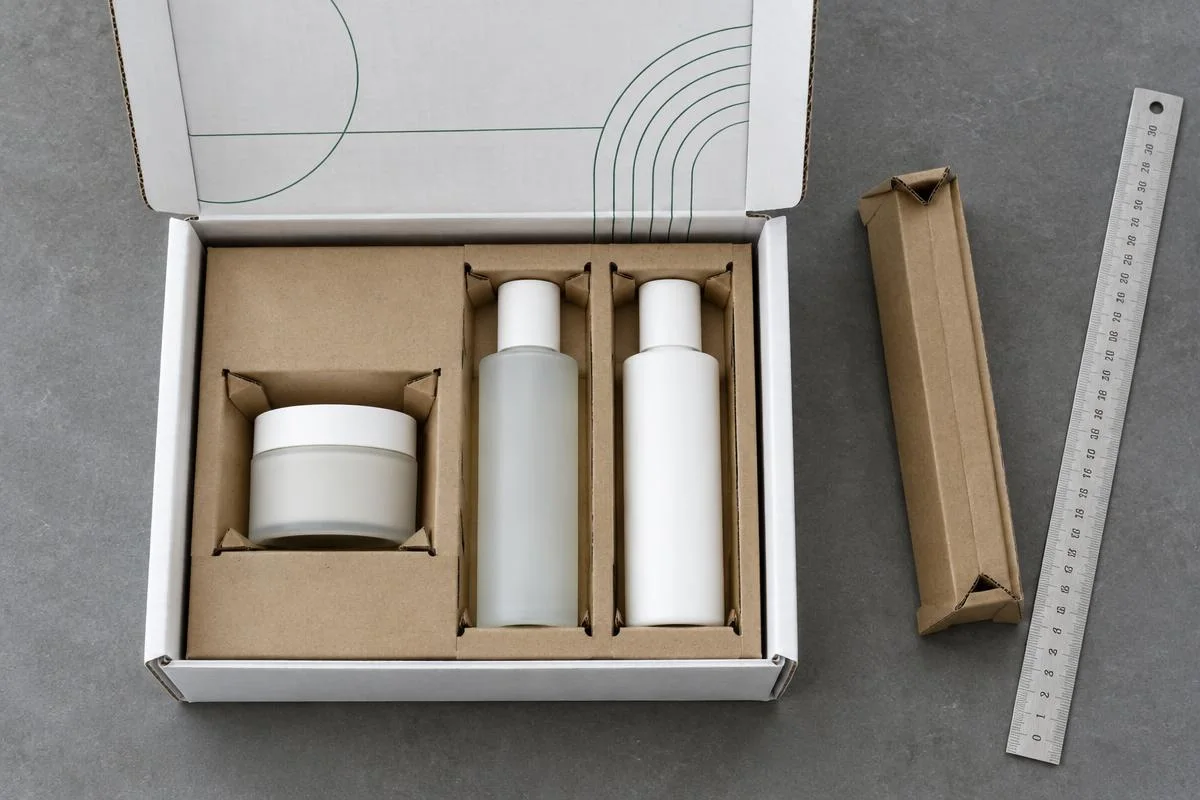
Try the Smallest Practical Fit
The smallest box is not always the best box. Staff still need room to place and remove the goods. Protective wrap needs room too. A tight lid that presses on a bottle cap can cause problems even if the box looks neat.
Make a sample pack and close it fully. Check each wall, the lid and the front tuck. Our box size guide can help you record the right measurements. Use the Box Builder for a visual starting point, then confirm the final drawing and physical fit with the team.
How to Print Your Logo Clearly
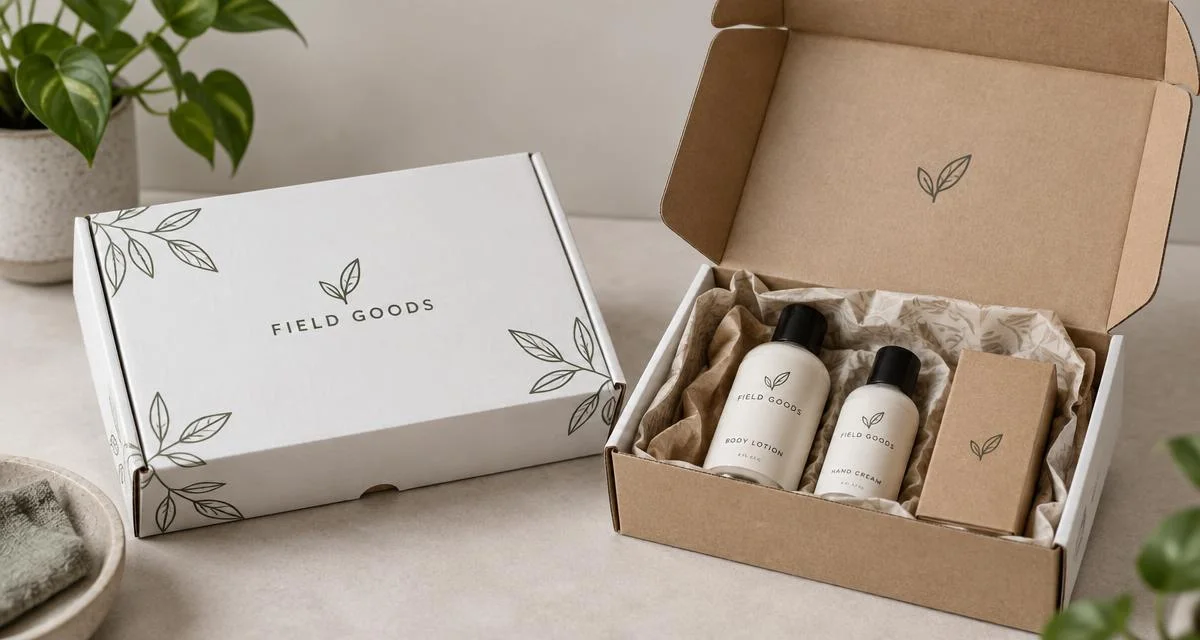
For custom printed mailer boxes with logo, a clear mark matters more than filling every panel. Keep enough contrast between the mark and the board. Leave space around it, and keep key text away from folds, cuts and tuck tabs.
Supply a vector logo if you have one. A small image saved from social media may turn soft when enlarged. Photos need enough detail at their final print size. Ask the printer for the correct file settings rather than guessing.
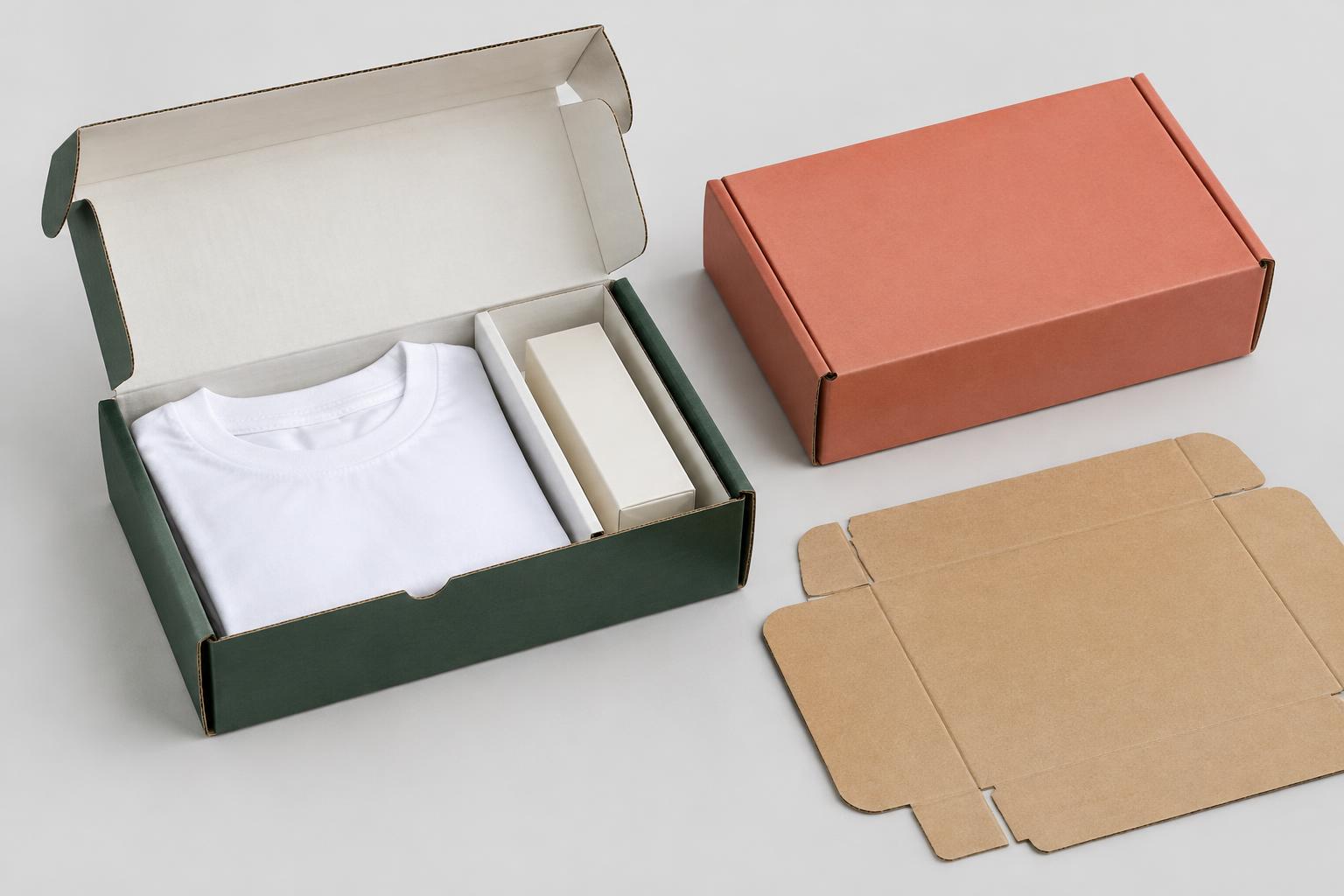
The dieline is the flat box drawing. It shows panels, folds and cuts. Place your art on the approved dieline for the exact box size. A drawing for a similar box is not close enough.
Outside Print or Inside Print?
Outside print identifies the pack before it is opened. Inside print can hold care notes, a short thank-you or a simple pattern. Keep any message useful. A long wall of text inside a lid is hard to read and often adds little.
For an example of this approach, see printed mailer boxes with a patterned interior. Treat the design as an option, not a reason to print every surface.
Use our artwork guidelines to prepare files. The printing options page explains choices to discuss with the team. Always check logo direction, panel placement, small text and color notes on the proof.
Pick a Print Method That Fits the Order
Digital, flexographic and lithographic processes can suit different designs and runs. Availability depends on the printer, board and box structure. One method is not always cheaper or better than another.
Digital printing often suits shorter runs or artwork changes. Flexographic printing uses plates and is common for repeat corrugated work. Lithographic printing can provide detailed graphics, sometimes through a printed sheet applied to the board. Ask what is being quoted for your specific pack.
Request separate costs for setup, plates, cutting tools and later changes. If you plan to reorder, ask which costs apply again. Also ask whether different artwork versions share one order quantity or count as separate runs.
For custom mailer boxes with logo, you may only need a clean one-color mark. Compare that with full-color print before adding special effects. Spend on the parts customers can see and the parts that protect the goods.
Plan an Order of 2,000 Custom Printed Mailer Boxes
A 2,000-box order deserves more checks than a quick screen proof. You will store the stock, pay to ship it and use it across many customer orders. A small error repeats 2,000 times.
Start with real demand. Estimate how many boxes you use in a normal week and how long the stock will last. Allow for damaged blanks, sample packs and product changes. Keep seasonal messages off the main box if you may still be using it after the holiday.
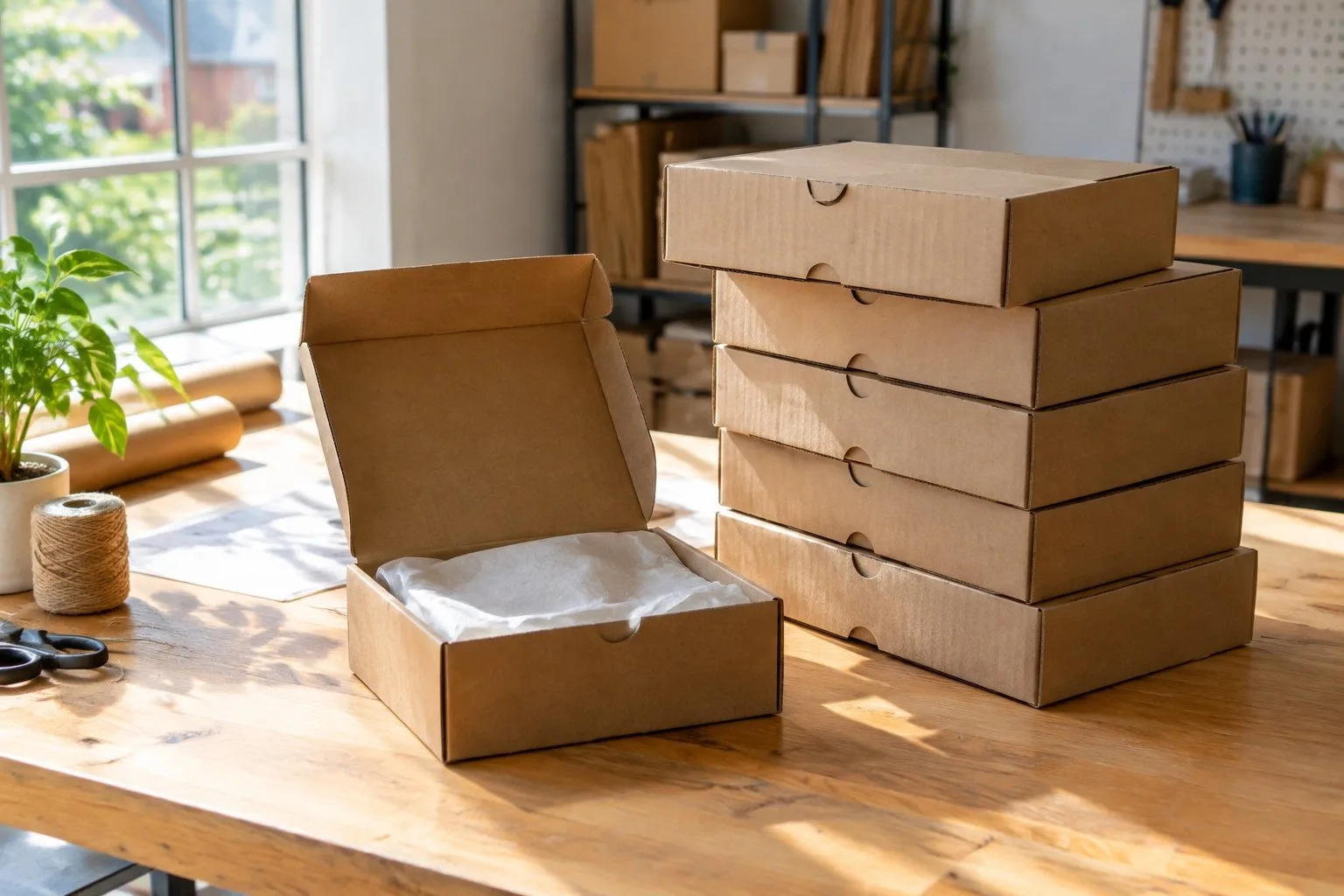
Ask for packed carton counts and storage dimensions. Flat boxes take less room than assembled boxes, but a bulk shipment still needs a dry, clean storage space. Keep board away from damp floors and places where it may bend under heavy stock.
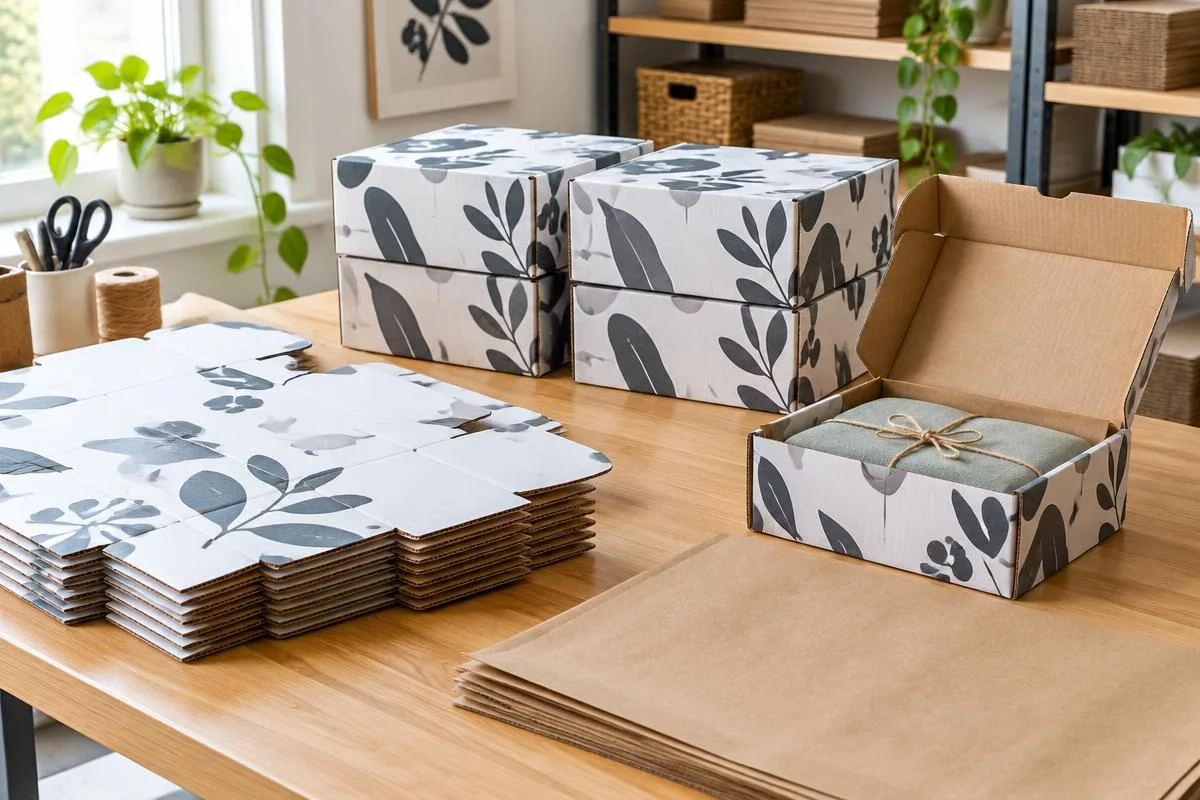
Compare Total Cost, Not Just Price Per Box
Get the same specification quoted at each quantity. A cheaper quote is not a fair comparison if it uses weaker board, fewer printed panels or no insert.
Include tooling, samples, inserts, freight and any applicable taxes or fees in the total. Divide that full amount by the usable box count. Then consider packing time and parcel cost as part of the wider decision.
For example, one blank may fold faster than another. Over 2,000 orders, a small time difference can affect daily work. Try the sample with the person who packs orders, not just the person who approves the design.
Confirm the delivery ZIP code, receiving hours and unloading needs. Do not treat a production estimate as a guaranteed arrival date.
Match the Box to the Product
A clothing brand may need room for a folded shirt, a card and a clean tissue wrap. A fitted box can keep the pack neat without a large amount of filler.
A skincare brand should check bottle caps, pumps and jars. Use dividers or inserts where items might strike each other. The outer box is only one part of protecting a glass pack.
A monthly kit needs room for the largest planned mix, not just this month's goods. If the contents change often, removable dividers or two standard sizes may work better than one fixed insert. Explore subscription mailer boxes for that use.
A candle or gift shop should test weight as well as size. The lid must close without pressing on the product, and the base needs enough support for the packed load.
For direct parcel delivery, compare shipping mailer boxes with the full protection plan. Follow the carrier's packing advice and check whether tape or a separate carton is needed.
Keep Waste and Recycling Claims Specific
A smaller, well-fitted pack can use less filler. Simple inserts can also make sorting easier after delivery. But “green,” “eco-safe” or “fully recyclable” should not be added just because a box looks like paper.
Coatings, plastic layers, tape and inserts can change how a pack is handled. Local recycling programs differ across the US. Ask the supplier for details about the exact material, then make claims you can support.
If recycled content matters, request the actual percentage and any supporting records. Do not confuse recycled content with recyclability. They answer different questions.
Our sustainability page covers choices to discuss. Keep disposal notes short and accurate, and avoid promising that every customer can recycle every part.
Check a Sample Before the Full Run
A digital proof checks artwork. A plain sample checks shape. A printed sample helps you inspect color, text and finish. These checks serve different jobs; ask which ones are included.
Pack the actual goods and inspect the closure. Check movement, pressure on caps and the strength of the base. Look for rubbing where printed surfaces touch. Test a realistic delivery route or seek appropriate transport testing for fragile or costly goods.
Before approval, confirm:
- Inside and outside dimensions, with clear units
- Board, print method and printed sides
- Logo position, colors and readable small text
- Insert fit and packed weight
- Closure, sealing and any outer carton
- Final quantity, full price and delivery plan
No sample removes every shipping risk. It helps find issues before they become a bulk-order problem.
What to Send for an Accurate Quote
Send the product dimensions, packed weight, quantity, logo files and delivery ZIP code. Add photos of the full product set, the insert needs and a short note about how orders are shipped.
If you need custom mailer boxes as a printed packaging solution, the useful question is not “What is your cheapest box?” It is “What box, board and print will fit this pack at this quantity?” Clear details make answers easier to compare.
PackologyPro's custom packaging boxes range includes options for different products and presentation needs. Use Request a Quote to share your brief. Ask the team to confirm current sample options, production timing and freight before placing the order.
For a broader look at shapes and uses, read our practical custom mailer box guide. This article focuses on the extra checks that matter when print, logo placement and a bulk run are involved.
A useful printed box is not the one with the most ink. It is the one that fits, closes well, prints clearly and works for your packing team.
Frequently asked questions
What are custom printed mailer boxes made from?+
Many use corrugated board with a wavy layer between paper liners. Thin paperboard is a different material. Ask for the exact board, liner and strength specification so you can judge whether the pack suits your goods and shipping route.
Can I print a logo inside and outside the box?+
Both may be available, depending on the box and print process. Supply artwork on the approved dieline and ask for a quote showing each printed side. Inside print is useful for a short note or pattern; it does not need to cover every panel.
What should I check before ordering 2,000 custom printed mailer boxes?+
Check a physical sample, product fit, logo proof, board specification, total delivered cost and storage needs. Confirm the order quantity and delivery ZIP code. Use the same specification when comparing quotes, and ask which setup charges apply to a reorder.
Should I choose kraft or white mailer boxes?+
Kraft works well with dark marks and simple art. White stock provides a lighter base for color-rich designs. Compare a print sample on the real material, since the board color affects the result. Choose the board strength separately from its appearance.
Can a printed mailer box ship without another carton?+
Sometimes, but not for every product or route. Board strength, closures, inserts, weight and fragility all matter. Check current carrier packing guidance and test the packed box. Fragile goods may need cushioning, extra sealing or an outer shipping carton.
Do I need a physical sample if I have a digital proof?+
A digital proof checks artwork, not how the goods fit or how the box folds. A physical sample helps you check closure and movement. A printed sample adds checks for color and finish. Ask which sample type is offered before approving the run.
How do I measure a mailer box for a product set?+
Arrange all the goods with their inserts, wrap and cards, then measure the complete pack. Confirm inside length, width and depth with the supplier and state the units. Also check the closed outside size for carrier pricing and storage.
Will buying more boxes always reduce my costs?+
The unit price may fall, but total spending can rise. Include freight, setup, storage and possible unused stock. A larger run is useful only if you can use the boxes before your product or artwork changes. Compare the full order cost, not one price line.
Need packaging built to this spec?
Send us your product dimensions and quantity — we'll return a free dieline, a 3D mockup and itemized pricing within 24 hours.
Request a free quote