Last updated: November 27, 2026 · By the PackologyPro Packaging Team
You worked hard on your product. You tested it, priced it and finally made the sale. Then the box shows up at your customer’s door with a crushed corner. That feeling hurts. It is also the reason so many brands now choose corrugated mailer boxes.
A good mailer box does two jobs. It keeps your product safe on a long, bumpy trip. And it gives your customer a small happy moment when they open it. In this guide, we will walk you through everything in plain words: what these boxes are, which board to pick, white vs kraft, sizes, printing, and how to order in bulk without stress.
We wrote this for real US sellers: small shops, growing e-commerce brands and subscription companies. No fluff. Just the things we wish every buyer knew before placing an order.
What Are Corrugated Mailer Boxes?
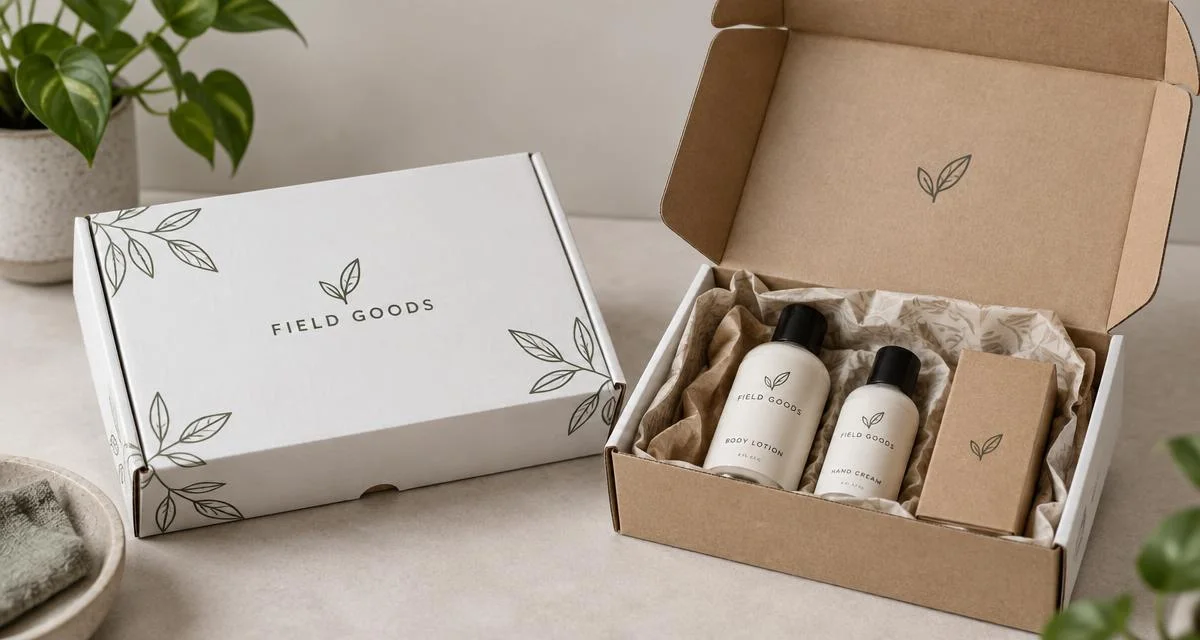
Corrugated mailer boxes are one-piece shipping boxes made from corrugated cardboard. They fold into shape with no glue or tape needed at the sides. Most styles have a front tuck lid with two dust flaps, so the box closes neatly and opens like a little gift.
The word “corrugated” is about the board itself. Inside each sheet is a wavy middle layer, called the flute. It sits between two flat paper layers, called liners. That wavy layer works like a row of tiny arches. It soaks up bumps and helps the box stand up to stacking.
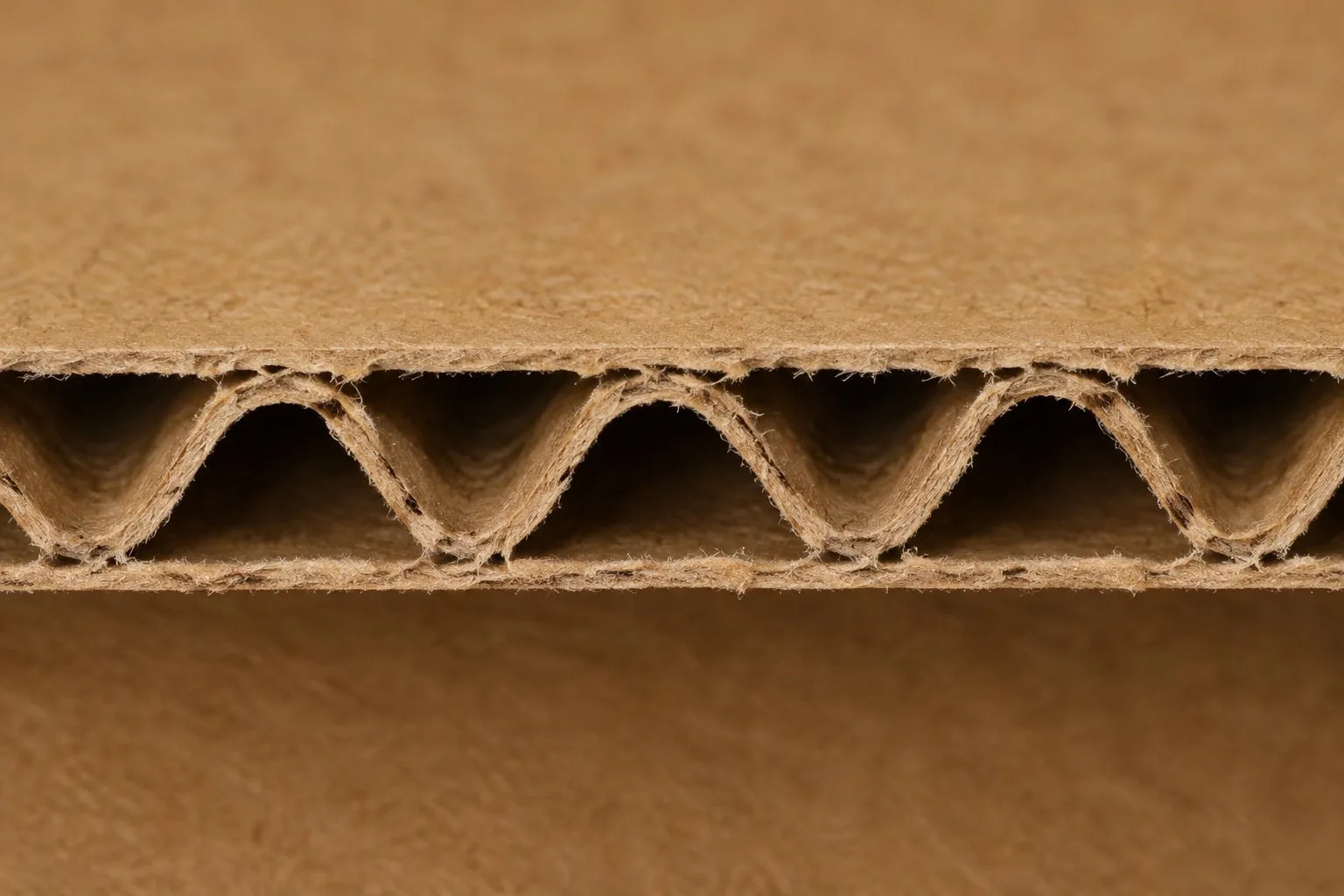
The wavy flute inside corrugated cardboard is what gives a mailer box its strength.
This is why corrugated cardboard mailer boxes feel so different from a thin folding carton, like a cereal box. A carton looks nice on a shelf. A corrugated mailer is built to travel. You can see our full range of mailer boxes to compare styles side by side.
Why US Brands Love Corrugated Mailers in 2027
Online shopping in the US keeps growing, and shoppers expect more from every delivery. They want their order to arrive in one piece. Many also want packaging that feels thoughtful and is easy to recycle. Corrugated mailers check all of those boxes.
- They protect. The fluted board guards against drops, pressure and stacking in trucks.
- They look good. A clean, folded box with a tuck lid feels more premium than a plastic bag.
- They save time. They ship flat and fold in seconds, so packing day goes faster.
- They are easy to recycle. Plain corrugated board is widely accepted in US curbside recycling, as long as it stays clean and dry. Check your local rules for any coatings or add-ons.
- They build your brand. Your logo, colors and a short thank-you note can turn a plain delivery into a moment people share.
Here is something we hear a lot from brand owners: “I did not expect the box to matter this much.” But it does. Your box is often the first thing a customer touches. It is your handshake.
Choosing the Right Corrugated Board
Not all corrugated board is the same. The two things to look at are the flute size and the wall type. Do not worry, it is simpler than it sounds.
Flute sizes, made simple
| Flute | How it feels | Best for |
|---|---|---|
| E-flute | Thin, smooth, about 1/16 inch | Retail-style mailers, cosmetics, apparel, sharp printing |
| B-flute | Thicker, about 1/8 inch, more cushion | Heavier items, glass jars, candles, shipping boxes |
| F-flute | Very thin and fine | Small, light items with a premium look |
| BE double wall | Two flute layers | Heavy or fragile products that need extra strength |
For most brands, E-flute is the sweet spot. It is strong enough for daily shipping and smooth enough to print a crisp logo. If your product is heavy, breakable or ships far, ask about B-flute or double wall. Our corrugated mailer boxes page lists the options we make every day.
Single wall or double wall?
Single wall means one flute layer. It handles most e-commerce orders well. Double wall adds a second layer. It costs a little more, but it can save you from broken products and unhappy reviews. A simple rule: if one broken item would cost you more than the upgrade, go stronger.
What Does ECT Mean on a Mailer Box?
Flip over almost any shipping box and you may see a round stamp on the bottom flap. That is the box maker’s certificate. On many boxes it shows an ECT number. ECT stands for Edge Crush Test. It tells you how much weight the board edge can hold before it crushes, measured in pounds per inch of edge. In simple words, ECT is about stacking strength.
Why does that matter so much? Because your box rarely travels alone. It sits at the bottom of a pile in a truck, a warehouse and a sorting center. A higher ECT helps the walls stay straight when other boxes press down from above.
What 32 ECT means
32 ECT is the most common rating for single wall boxes in the US. The board edge can hold about 32 pounds per inch before it gives way. Under common industry guidelines, it is often used for packed boxes up to about 40 pounds. For most everyday e-commerce orders, like clothing, skincare, books and small gifts, 32 ECT mailers do the job very well.
What 44 ECT means
44 ECT is a stronger single wall board. It holds about 44 pounds per inch of edge, and it is often used for packed boxes up to about 65 pounds. Think of it as an upgrade for heavier products, glass jars, candles, or boxes that will be stacked high in storage. It costs a bit more, but it can feel like peace of mind when your best seller is fragile.
Please treat these weight numbers as a helpful starting point, not a promise. How you pack, the box size, inserts and the shipping route all matter too. Always test a real packed sample.
A sample drop test: what it looks like in practice
Numbers on a chart are helpful, but a real test tells you more. Here is a simple sample drop test our team runs on mailer prototypes before a customer approves a big order. It follows the basic idea of common parcel tests: drop the packed box on its faces, edges and corners from a set height.
| Test detail | What we used |
|---|---|
| Box | E-flute RETF mailer, 10 x 8 x 4 inches |
| Board | 32 ECT single wall vs 44 ECT single wall |
| Packed weight | About 6 pounds (two glass candle jars plus a kraft insert) |
| Drop height | 30 inches onto a hard floor |
| Drops | 10 drops: 1 corner, 3 edges, 6 faces |
What we saw: both boxes kept the jars whole when the fitted insert was used. The 32 ECT box showed a soft dent on the drop corner. The 44 ECT box kept a sharper corner and its lid still closed flush. When we removed the insert, one jar chipped in the 32 ECT box. The lesson is simple: a snug insert matters as much as the board grade.
Please read this as one sample result, not a lab certificate. Your product, box size and carrier can change the outcome, so ask us to test a sample with your real item.
How board strength affects shipping
- Fewer crushed corners. Stronger board keeps its shape under stacked weight, so the box looks good on arrival.
- Better product safety. Walls that do not bow inward put less pressure on what is inside.
- Fewer returns and refunds. One damaged order can cost you the product, the shipping fee and a happy customer.
- Smarter costs. Too weak a board leads to damage. Too strong a board adds cost and a little weight. The right match saves money both ways.
Why flute type and ECT are not the same thing
This one confuses a lot of buyers, so let’s clear it up. Flute type tells you the shape and thickness of the wavy middle layer, such as E-flute or B-flute. ECT tells you how strong the finished board tested. Two boards with the same flute can have different ECT ratings, because the paper weight and quality of the liners and flute also count. So an E-flute mailer can be made in 32 ECT or a stronger grade. When you ask for a quote, it helps to share both: the flute you like for looks and the strength you need for shipping.
Mailer Box Styles: Which Closure Is Right for You?
Strength is one part of the story. The style, or how the box folds and closes, shapes how it feels to open. Here are the styles buyers ask us about most.
Roll End Tuck Front (RETF)
This is the classic mailer box most people picture. The sides roll over to form double walls, and the lid tucks in at the front. It feels sturdy, opens like a little treasure chest and looks great with inside printing. RETF is a favorite for subscription boxes, gift sets and premium e-commerce orders.
Roll End Tuck Top (RETT)
RETT also has rolled ends for strong side walls, but the lid tucks in from the top instead of the front edge. It is often a little simpler and can use less board. Many brands like it for lighter products, retail kits and boxes that need a neat, flat lid surface for a logo.
Mailers with dust flaps
Dust flaps are the small side flaps that fold in under the lid. They close the gaps at the corners, so dust, light moisture and tiny items stay where they belong. They also make the box feel tighter and more finished. If you ship small parts, powders or items wrapped in tissue, dust flaps are a smart small detail.
Tear-strip mailer boxes
A tear strip is a pull tab built into the board. Your customer pulls it and the box opens cleanly, no knife or scissors needed. It is safe, quick and kind of fun. Tear strips also show if a box has been opened, which helps with tamper evidence. Many tear-strip mailers add a peel-and-seal adhesive strip, so you can close the box without tape. Some even include a second strip for easy returns, which apparel brands love.
Double-wall mailer boxes
Double-wall mailers use two flute layers glued together, often BC or EB flute. They are much stiffer and usually come with higher strength ratings. Choose them for heavy items, glass, electronics, tools or long shipping routes. They are thicker, so remember to allow a little more room when you plan inside size. If one broken product would hurt more than the extra box cost, double wall is often worth it.
Want to learn more about papers, liners and coatings? Our packaging materials guide explains each one in easy terms.
White vs Kraft: Which One Fits Your Brand?
This is one of the most common questions we get. Both are great. The right pick depends on your brand’s look and feel.
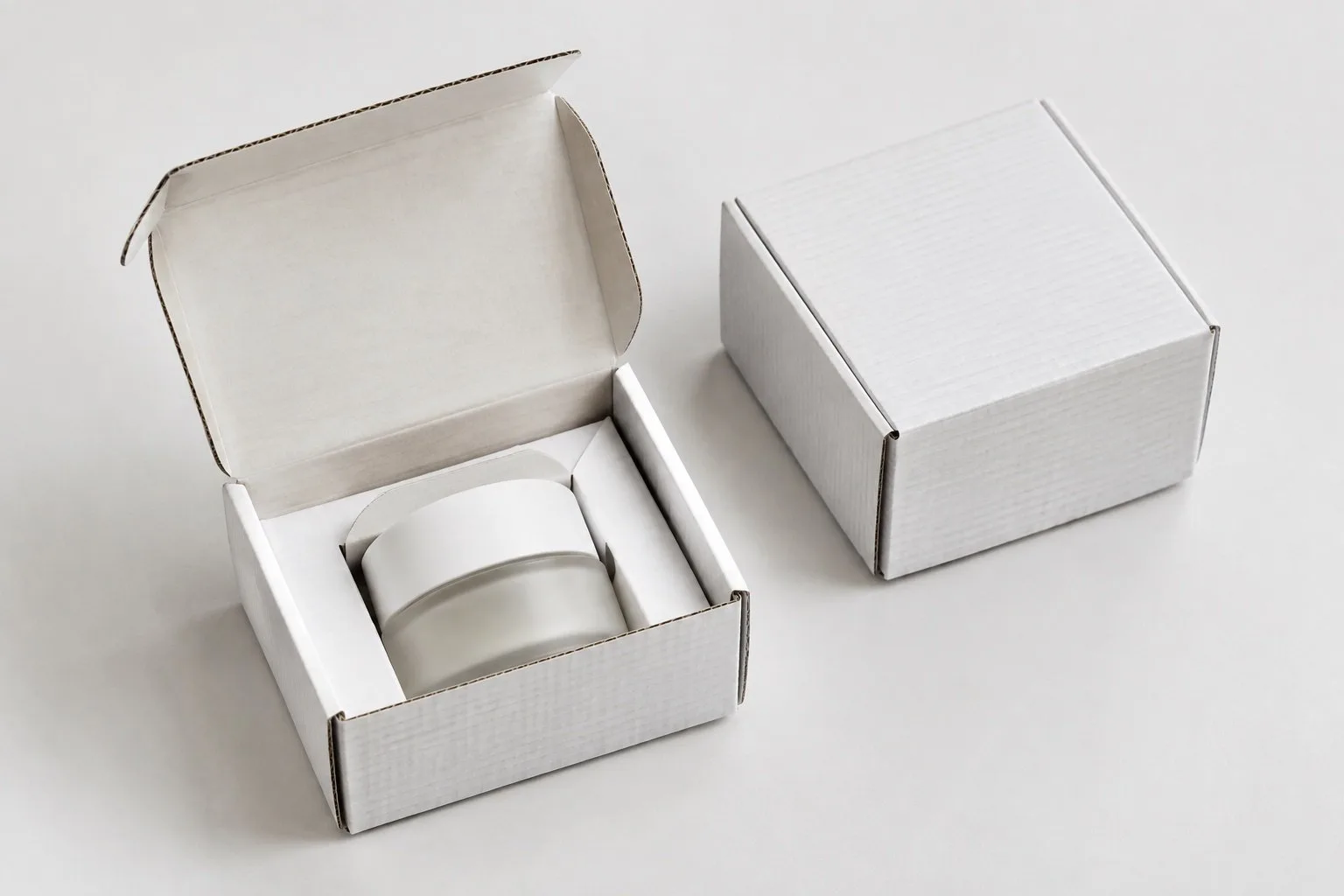
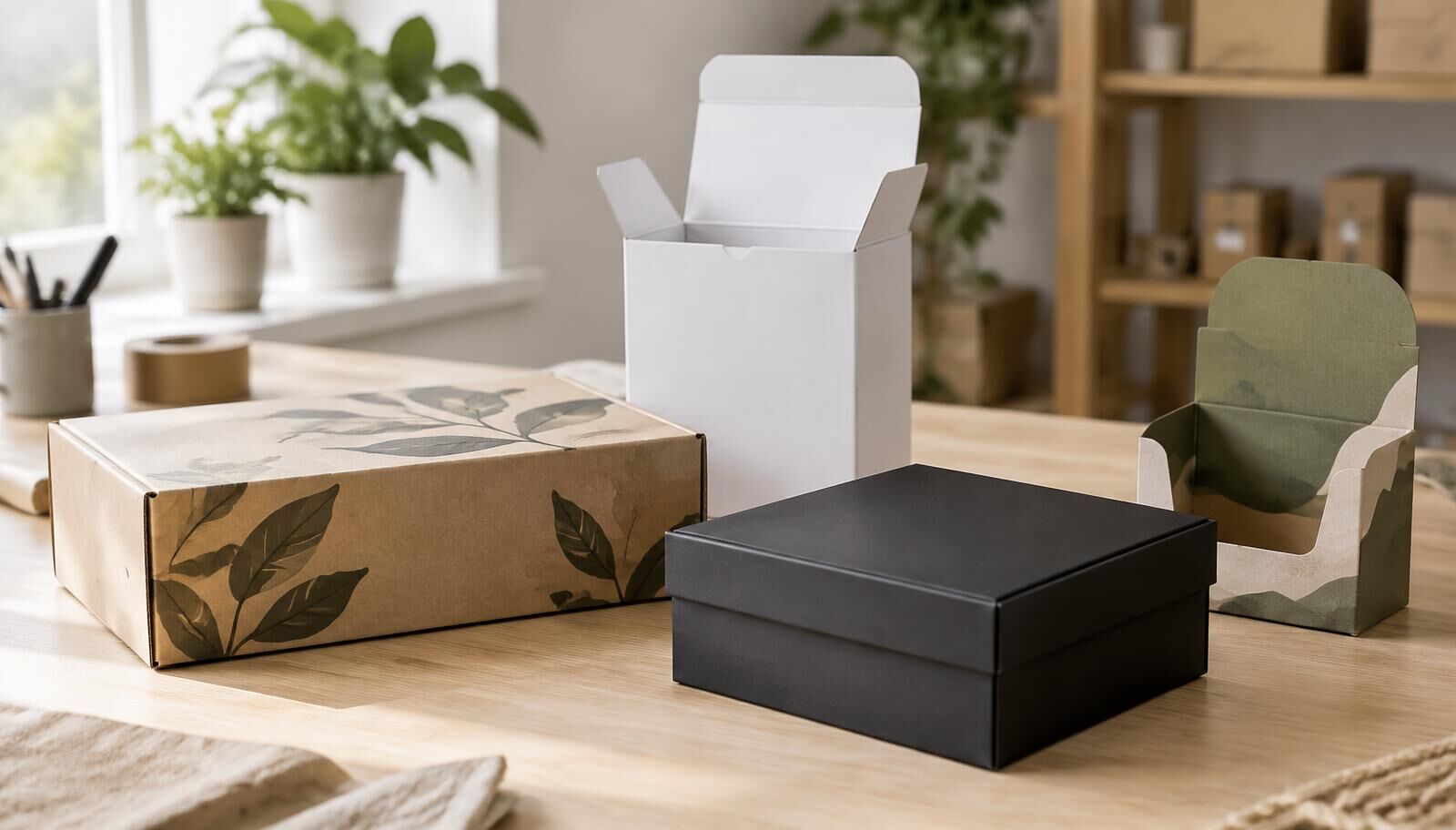
White corrugated mailer boxes make bright colors and clean logos pop.
White corrugated mailer boxes
White corrugated mailer boxes have a bright white outer liner. Colors look bolder and cleaner on them. They feel fresh and modern, which is why beauty, skincare, wellness and tech brands love them. If your logo uses light colors or soft pastels, white board helps them show up true.
Kraft corrugated mailer boxes
Kraft board has a natural brown color. It feels earthy, honest and handmade. Many eco-minded brands, coffee roasters, candle makers and craft shops choose kraft. One black or white ink on kraft can look stunning and simple.
Quick way to decide
- Choose white if you want full color printing, bright photos or a clean, high-end look.
- Choose kraft if you want a natural feel, simple one-color printing or a rustic vibe.
- Mix both: a kraft outside with a white or printed inside can give a lovely surprise when the lid opens.
Getting the Size Right (This Saves You Money)
A box that is too big lets your product slide and break. It also costs more to ship. US carriers like UPS, FedEx and USPS often charge by dimensional weight. That means a big, light box can cost as much to ship as a small, heavy one.
So the goal is a snug fit. Here is how to measure:
- Measure the inside space you need: length, width, then depth.
- Add a little room for tissue, inserts or a thank-you card, often 1/8 to 1/4 inch per side.
- Remember that inside size and outside size are not the same. Board thickness adds to the outside.
- Always ask for a sample or a plain mockup before a big run.
Our box size guide shows how to measure step by step. If you want to see your box before you order, try the 3D Box Builder and play with sizes and colors in real time.
Tip from our team: put your real product in a sample box and shake it gently. If you hear it move, add an insert or go one size smaller. Your customers will feel the difference.
Custom Corrugated Mailer Boxes: Printing and Design
Custom corrugated mailer boxes are where your brand comes alive. You can print the outside, the inside or both. Each choice creates a different feeling.
- Outside printing tells everyone, even the delivery driver, who sent this box.
- Inside printing creates a “wow” moment the second the lid opens.
- Printing on both sides gives the full branded experience, great for gifts and subscriptions.
Printing methods in plain words
Digital printing is great for shorter runs and many colors. Offset printing gives very sharp, rich color and fits larger runs. Flexographic printing is simple and cost-friendly for one or two colors on kraft. Not sure which one fits? Our printing options page compares them, and our team can suggest the best match for your artwork.
Finishes and add-ons
You can add a matte or gloss coating, spot UV, foil stamping or custom inserts. Keep it simple at first. A great logo and one smart detail often beat five fancy add-ons. Also remember: some plastic coatings or foils can make recycling harder, so ask before you choose.
Artwork tips that avoid delays
- Use vector files (AI, PDF or EPS) for logos.
- Keep text away from folds and cut lines.
- Use the dieline your supplier gives you.
- Convert colors to CMYK, or share Pantone codes for exact matches.
Our artwork guidelines cover the full checklist. If you want a deep dive on logo printing, read our custom printed mailer boxes guide, or browse our custom printed mailer boxes.
Who Uses Corrugated Mailer Boxes?
Almost every type of online brand can use them. Here are some common ones we see:
- Subscription boxes: monthly snacks, books, beauty and hobby kits. See our subscription mailer boxes.
- Cosmetics and skincare: jars, serums and gift sets.
- Apparel and accessories: T-shirts, socks, hats and jewelry.
- Candles and home goods: items that need a snug, safe ride.
- Supplements and wellness: bottles that must arrive sealed and safe.
- E-commerce shipping: everyday orders that need tough, simple boxes. Explore our shipping mailer boxes.
Corrugated Mailer Boxes Wholesale: How to Order Smart
Buying corrugated mailer boxes wholesale is usually the best way to lower your cost per box. When you order more, setup costs spread across more units. But bigger is not always better. Here is how to order with confidence.
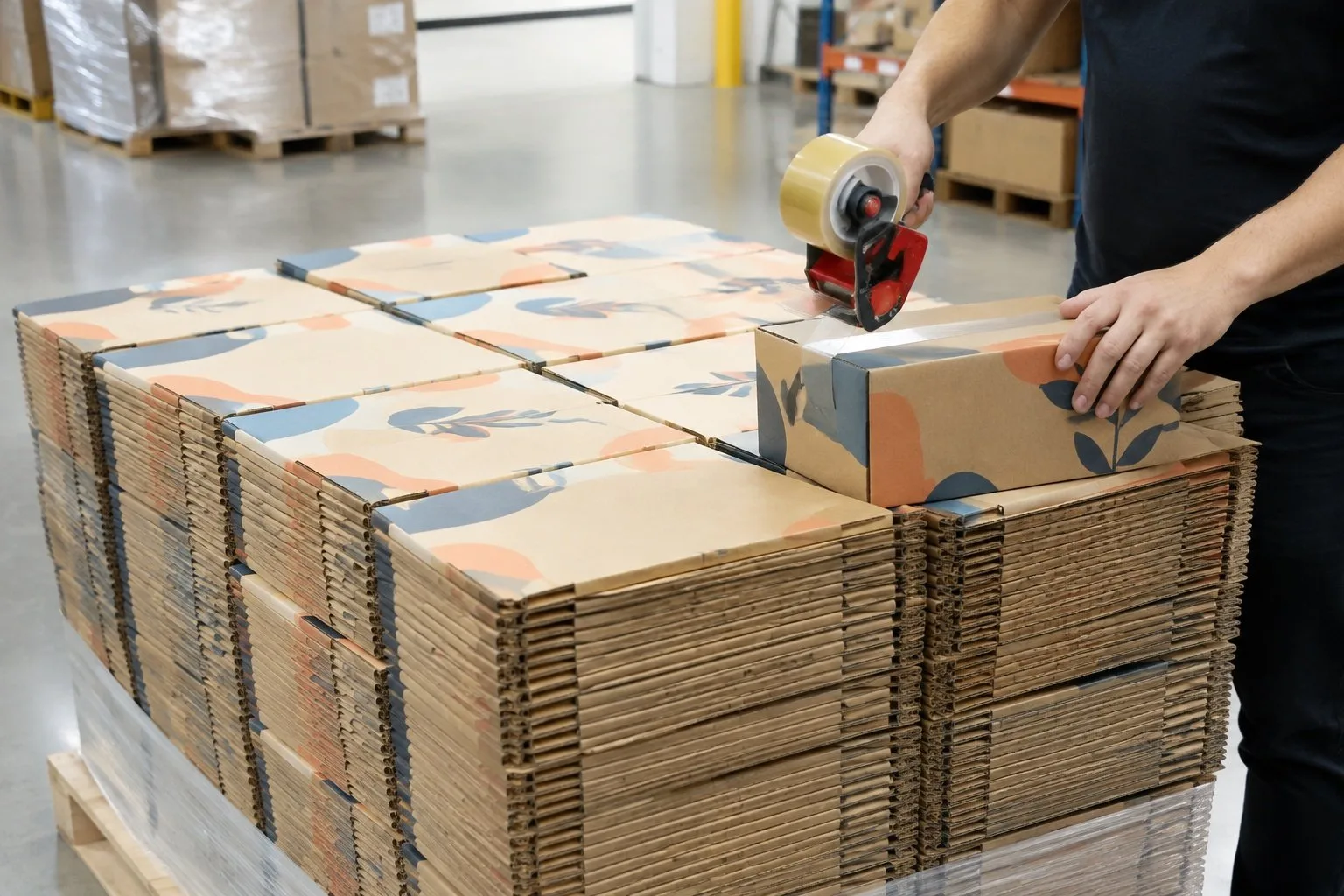
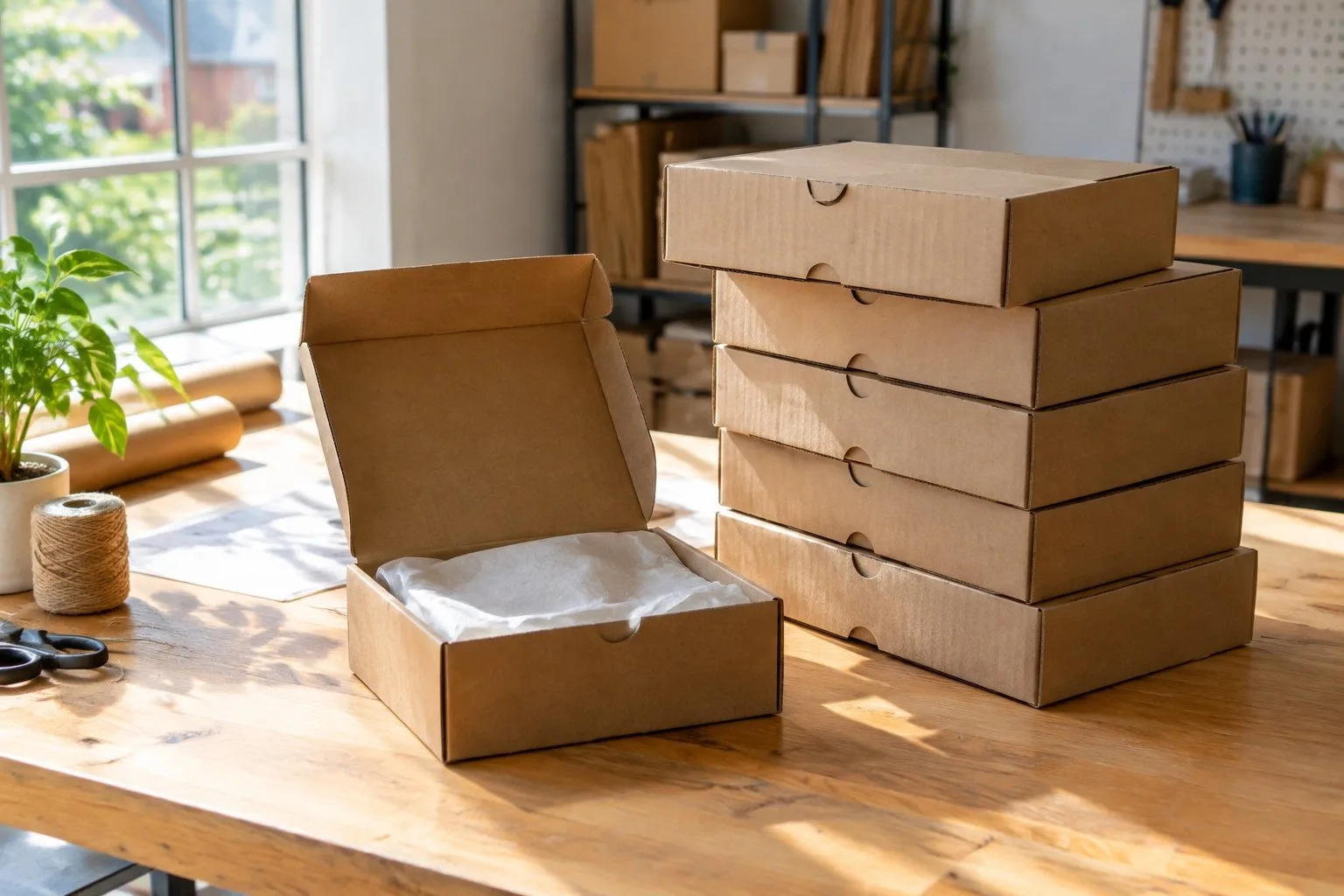
Wholesale orders ship flat to save space until packing day.
- Know your monthly use. Order enough for a few months, not a few years, so designs can change as you grow.
- Check your storage. Boxes ship flat, but a few thousand still need a dry, clean space off the floor.
- Plan around busy seasons. Order early before holidays, Black Friday and big launches.
- Ask about samples first. A sample is cheap insurance before a large run.
- Compare total cost, not just the box price. Freight, setup, inserts and wasted damaged goods all count.
At PackologyPro, our minimum order starts at just 50 units, so you can test a design before you scale. When you are ready, our team can quote larger wholesale runs with the same quality. You can request a free quote any time.
Looking for Corrugated Mailer Boxes Near Me?
Many buyers search for corrugated mailer boxes near me because they want boxes fast, or they want to talk to a real person. That makes sense. A local supplier can feel safer.
Here is the good news: you do not need a box maker in your town. PackologyPro is based in Denver, Colorado, and we ship custom boxes across the United States. You get help from a real team, digital proofs before printing, and delivery to your door, whether you are in New York, Texas, Florida or California.
When you compare any supplier, local or online, ask these questions:
- Can I get a sample or digital proof first?
- What is the minimum order?
- What board and flute will you use?
- How will the boxes be packed and shipped to me?
- Who can I talk to if something goes wrong?
Eco-Friendly Choices Without the Hype
More shoppers care about where their packaging ends up. Corrugated board is a solid start because it is paper-based and widely recycled in the US. To keep it that way, choose water-based inks when you can, skip extra plastic, and add a small “please recycle” note on the box. Be honest in your claims. Only say “recyclable” or “recycled content” if your supplier can back it up. Learn more on our sustainability page.
Customer Story: From Crushed Corners to Happy Unboxings
A small candle brand in Colorado came to us with a common problem. They shipped two 8 oz glass candles in a thin E-flute 32 ECT mailer with loose tissue. Around the holidays, more boxes arrived with crushed corners, and a few jars cracked. Each broken order meant a free replacement, a second shipping label and an unhappy review.
We changed three things. First, we moved them to 44 ECT board in the same RETF style. Second, we added a die-cut kraft insert so each jar had its own pocket. Third, we trimmed the box size by half an inch on each side, so the jars could not slide.
The owner told us the new boxes "feel solid in your hands." Damage reports dropped to almost zero over the next season, and the slightly smaller box helped keep shipping costs in check. The brand name is kept private at their request, but the steps work for almost any fragile product.
Common Mistakes to Avoid
- Ordering a box that is too big “just in case.”
- Picking the thinnest board for a heavy or fragile product.
- Skipping the sample and finding problems after 2,000 boxes arrive.
- Putting key text or the logo right on a fold.
- Ordering too many boxes before your branding is final.
- Forgetting inserts for products that rattle.
We have seen each of these happen. And every time, a short sample step could have saved the day.
Quick Checklist Before You Order
- Product size measured (length, width, depth)
- Board picked: E-flute, B-flute or double wall
- Color picked: white or kraft
- Printing: outside, inside or both
- Artwork ready in vector format on the dieline
- Inserts or tissue decided
- Quantity based on real monthly use
- Sample or proof approved
Final Thoughts
Your box is more than a box. It protects your hard work, and it tells your customer, “We care.” Corrugated mailer boxes give you both strength and style, at a price that grows with your business.
Start small, test a sample, and improve as you learn. Whether you need plain kraft mailers or fully printed white boxes, we are here to help. Explore our full range of custom packaging boxes, design yours in the Box Builder, or get a free quote today.
Frequently Asked Questions
What are corrugated mailer boxes used for?
They are used to ship products safely to customers. Brands use them for e-commerce orders, subscription boxes, gifts, cosmetics, apparel and more.
Are corrugated mailer boxes strong enough for shipping?
Yes. The wavy flute layer gives them strength against drops and stacking. For heavy or fragile items, choose B-flute or double wall board.
What is the difference between corrugated cardboard mailer boxes and folding cartons?
Corrugated mailers have a fluted middle layer that makes them strong for shipping. Folding cartons are a single thin sheet, better for retail shelves.
Should I choose white or kraft corrugated mailer boxes?
Pick white for bright, full color designs and a clean look. Pick kraft for a natural, eco feel and simple one-color printing.
Can I order custom corrugated mailer boxes in small quantities?
Yes. At PackologyPro, you can start from 50 units, which is great for testing a new design.
Is it cheaper to buy corrugated mailer boxes wholesale?
Usually, yes. Larger runs spread setup costs across more boxes, so each box costs less. Just order what you can store and use.
How do I find corrugated mailer boxes near me?
You can search for local suppliers, or order online from a US company like PackologyPro. We ship custom boxes across the United States.
What is the difference between 32 ECT and 44 ECT?
32 ECT is standard single wall board, often used for boxes up to about 40 pounds. 44 ECT is a stronger single wall grade, often used for boxes up to about 65 pounds and for fragile products. Always test a packed sample.
What is a Roll End Tuck Front (RETF) mailer box?
It is the classic mailer style with rolled double side walls and a lid that tucks in at the front. It is sturdy and opens like a gift box.
Are corrugated mailer boxes recyclable?
Plain corrugated board is widely accepted in US curbside recycling. Keep the box clean and dry, and check local rules for coated or foil-stamped boxes.
About the author
PackologyPro Packaging Team — This guide was written by the packaging specialists at PackologyPro in Denver, Colorado. Our team helps US brands choose board grades, box styles, inserts and printing every day, and we test samples before big production runs. Have a question about your box? Request a free quote and talk to a real person.
Last updated: November 27, 2026
Need packaging built to this spec?
Send us your product dimensions and quantity — we'll return a free dieline, a 3D mockup and itemized pricing within 24 hours.
Request a free quote