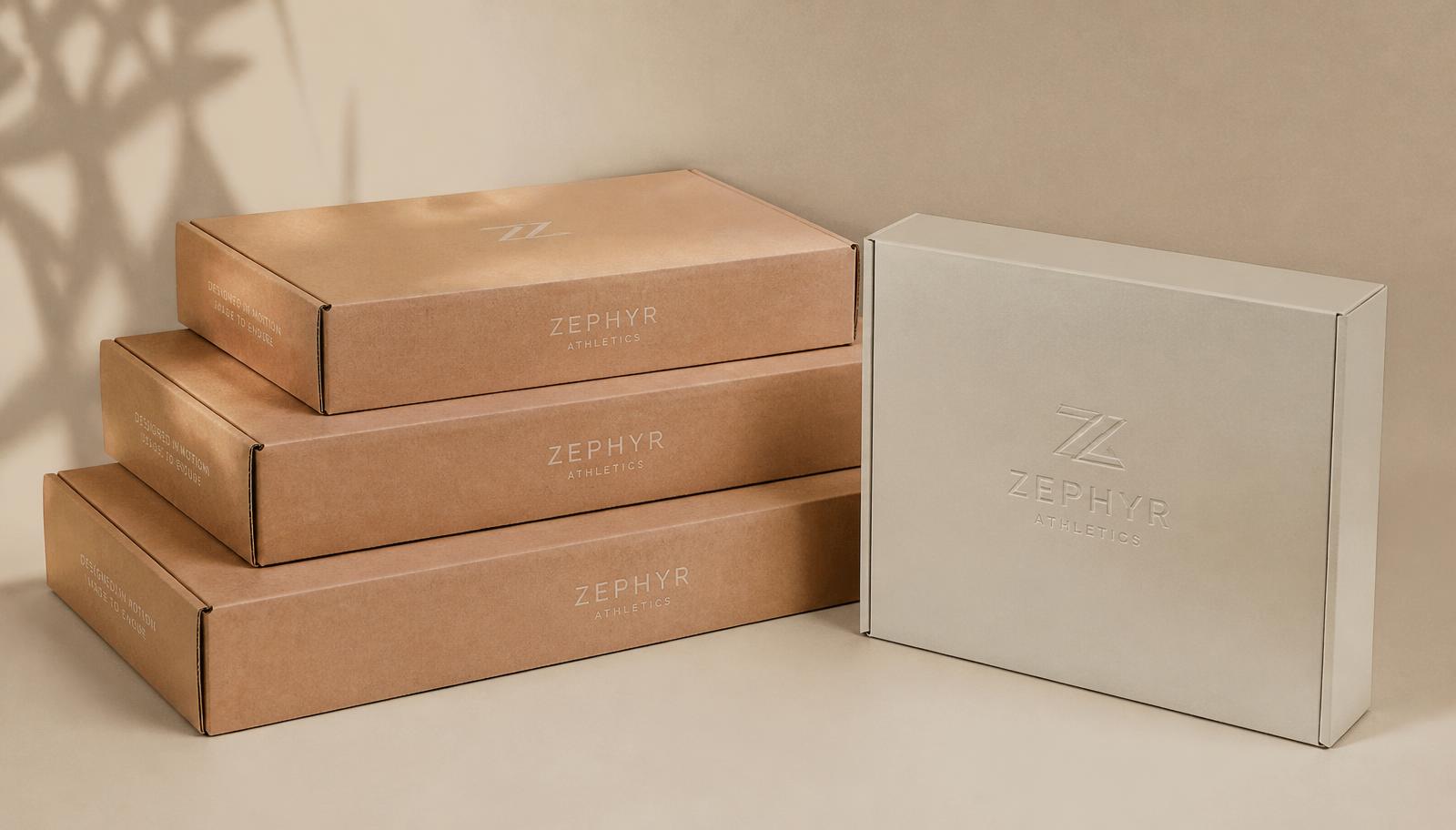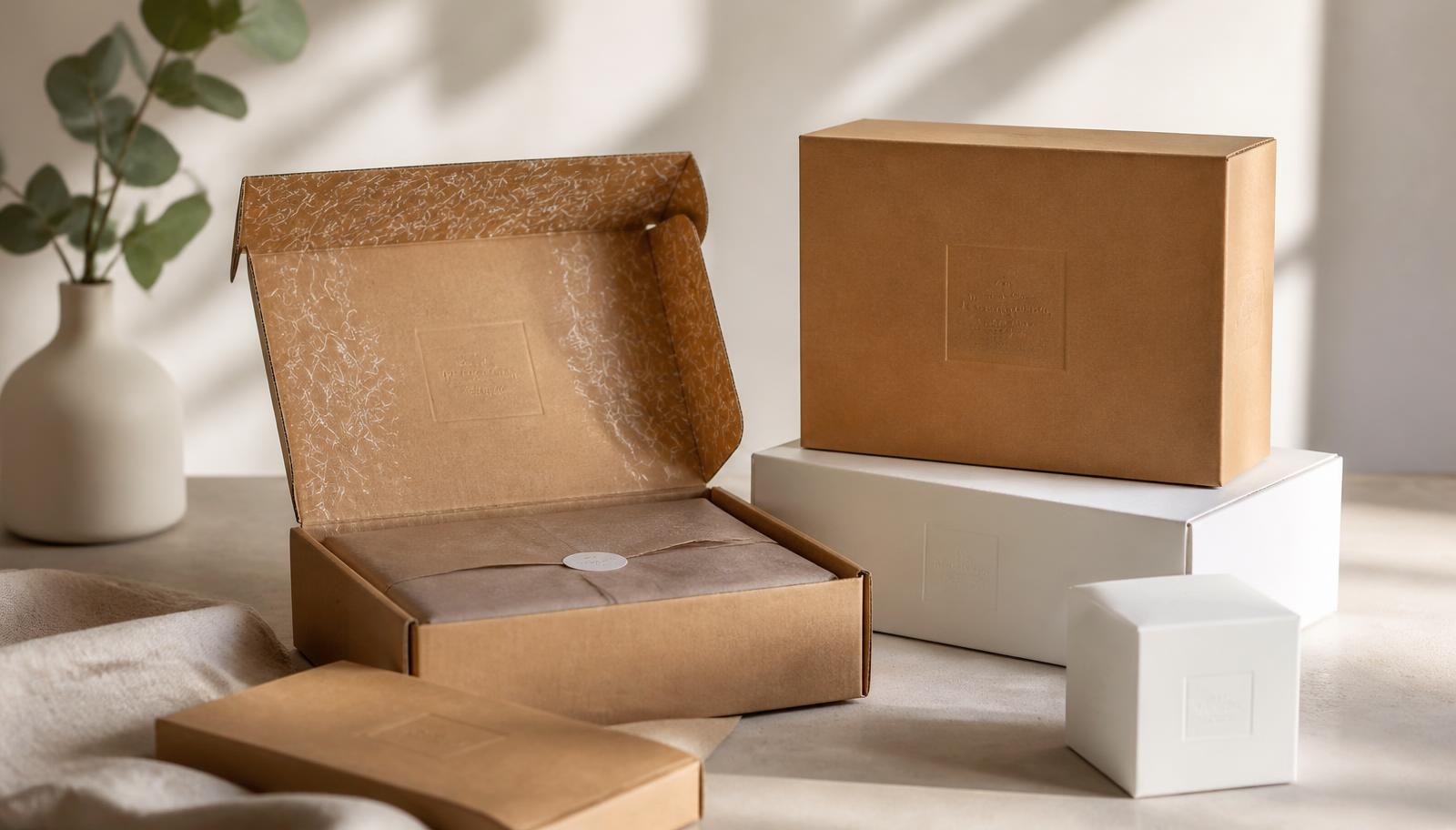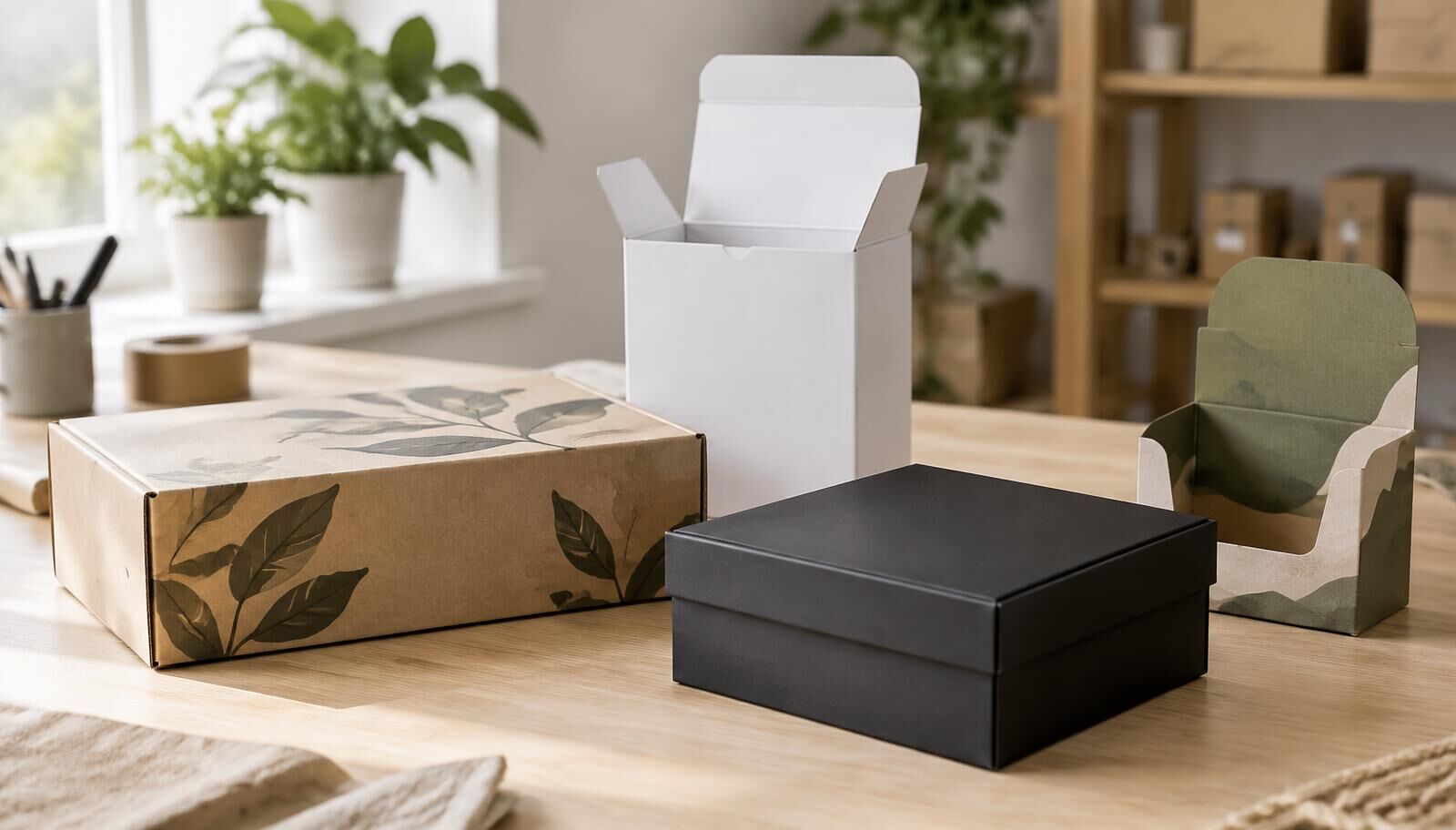
A plain-English guide to choosing custom packaging boxes: the main box styles, how corrugated, paperboard and rigid board compare, what matters in box design, and how to plan your first order.
You have a product that's ready to sell. Now you need a box for it. That sounds simple until you start asking questions. How big should it be? Will it survive the mail? Should it be plain kraft or fully printed? How many do you need to order?
Custom packaging boxes are made around your product instead of the other way around. The size, the board, the print and the inside of the box can all be chosen to suit what you sell and how you sell it. That freedom is useful, but it also means more decisions.
This guide walks through those decisions in plain terms. You'll learn the main box styles, how the common materials compare, what goes into good box packaging design, and how to plan an order without wasting money. By the end, you should know what to ask a supplier and what details to have ready before you request a price.
What Are Custom Packaging Boxes?
A stock box comes in fixed sizes. You pick the closest one and fill the gaps with paper or bubble wrap. A custom box starts with your product's measurements, so the fit is planned from the beginning.
"Custom" can mean a few different things, and it helps to know which ones you need:
- Size: the length, width and depth are set to fit your item.
- Material: you choose the board type, such as corrugated, paperboard or rigid board.
- Style: the way the box opens and closes, like a tuck end, a mailer or a lid and base.
- Print: your logo, colors, product details and artwork on the outside, inside or both.
- Inserts: cardboard or paperboard pieces that hold items in place.
- Finishing: coatings and effects that change how the box looks and feels.
You don't have to change all of these. Some brands only need a better-fitting plain box. Others want full print and a fitted insert. Start with what the product actually needs, then add the extras that make sense.
Why Businesses Choose Custom Packaging
The first reason is fit. When a box is sized to the product, there is less room for it to slide around. That usually means less filler, a neater pack and a lower chance of damage in transit.
The second reason is presentation. A printed box tells people whose product it is before they open it. On a store shelf, it helps shoppers find your brand. At home, it makes the unboxing feel planned rather than random.
There are practical benefits too. A box that is the right size can be easier to pack, stack and store. It can also help with shipping costs, since carriers often price parcels by size as well as weight.
It's worth being honest about the limits. A nice box will not fix a weak product, and it won't guarantee more sales. What it can do is protect your item, look professional and give customers a clear, consistent picture of your brand. For many businesses, that is reason enough.
Common Types of Custom Packaging Boxes
There is no single best box. Each style has strengths and trade-offs. Our box styles guide goes deeper, but here is a quick overview.
Mailer Boxes
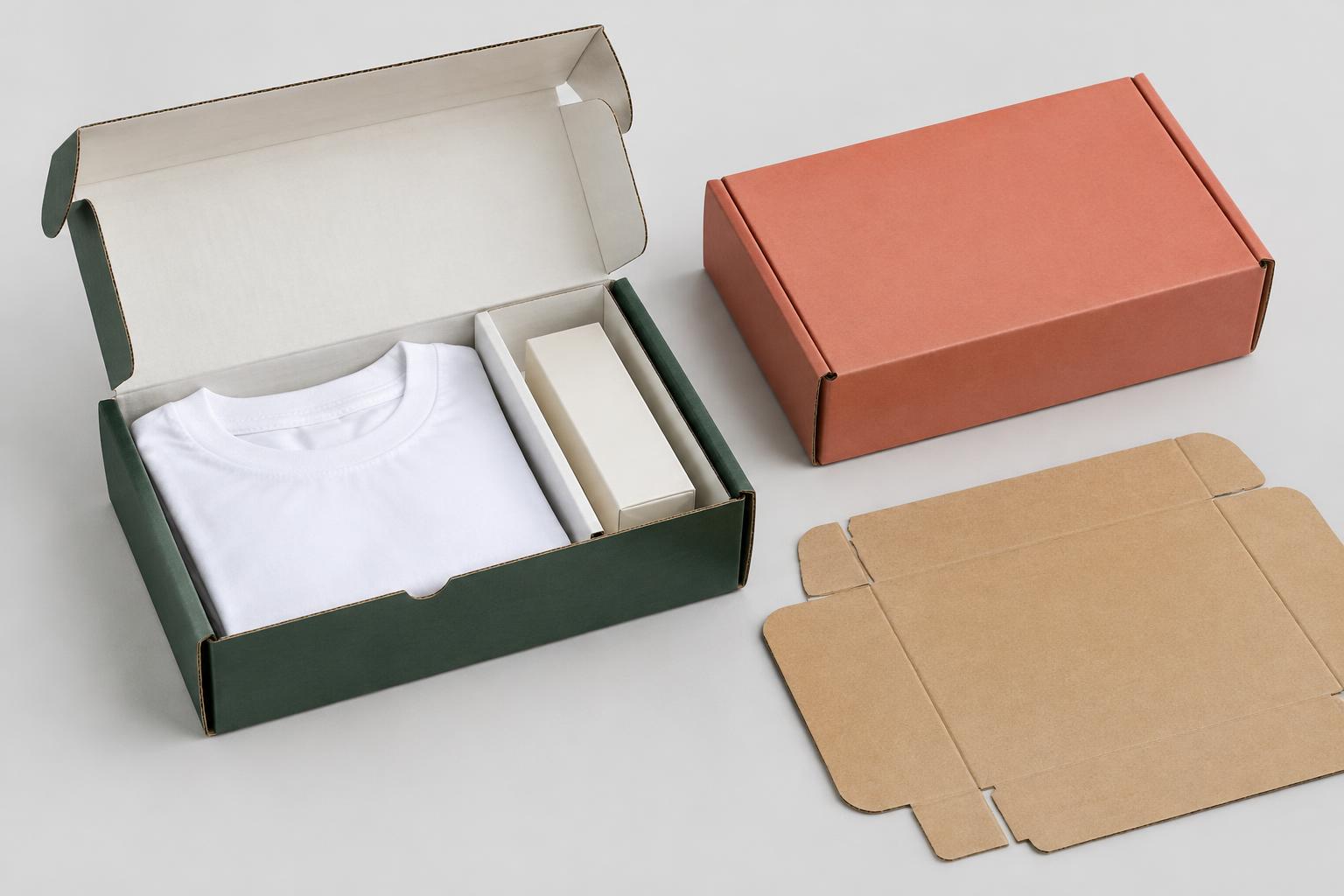
Mailers are folded from one piece of corrugated board. Most have a hinged lid and a locking front tab. They are popular with online stores because they ship well and open nicely. Custom mailer boxes are a strong choice for subscription kits, apparel and gift sets. The trade-off is that they take more space than a slim carton.
Shipping and Corrugated Boxes
These are the workhorses. They are built for strength and stacking, not for display. They suit heavier products and outer cartons that hold several retail boxes. Print is often simple, like a one-color logo.
Folding Cartons
Folding cartons are made from paperboard. They arrive flat and fold into shape, often with tuck ends. They are common for cosmetics, supplements, soap and small retail items. They print very well, but they are lighter, so they may need an outer box for shipping.
Rigid Boxes
Rigid boxes use thick board wrapped in printed or textured paper. They do not fold flat. They feel solid and premium, which is why brands use rigid gift boxes for jewelry, gift sets and high-value items. They cost more to make and take more storage space.
Retail Boxes
Custom retail packaging boxes are designed to sell on a shelf. They usually carry product details, a clear front panel and sometimes a window or hang tab. Many are folding cartons, made for good print quality and quick shelf recognition.
Display Boxes
Counter displays hold several units near the register or on a shelf. Display boxes often have a printed header and a tear-away or open front. They work well for small, repeat-purchase items.
Choosing the Right Packaging Material
The material affects strength, weight, cost and how your print looks. Most custom boxes use one of three main board types. You can read more on our packaging materials page.
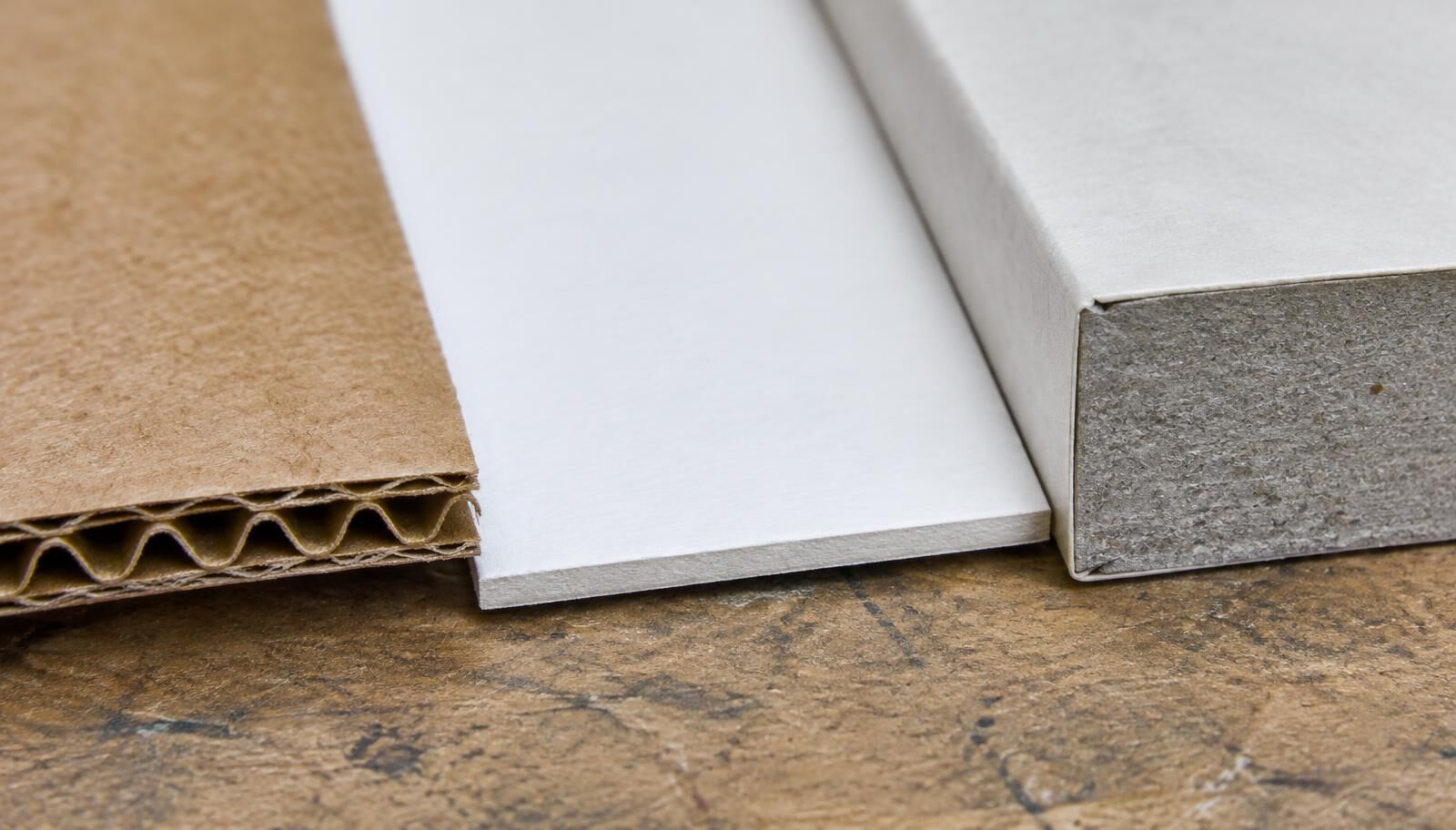
Corrugated Board
Corrugated board has a wavy layer, called fluting, between flat sheets. That middle layer adds cushioning and stiffness. It's the usual choice for anything that will travel through the mail or carry some weight. It comes in different thicknesses, so ask your supplier which option matches your product's weight and how it will ship.
Paperboard
Paperboard box packaging is thinner and smoother. It folds cleanly and holds sharp, detailed print, which makes it great for retail cartons. It is light, so it keeps costs and shipping weight down. The catch is protection. A paperboard carton on its own may not be enough for fragile or heavy items in the mail. Many brands use a paperboard retail box inside a plain corrugated shipper.
Rigid Board
Rigid board, sometimes called chipboard or greyboard, is thick and does not flex much. It is wrapped in paper to give it a finished look. It feels premium and protects well against crushing. It also costs more and takes up more room, since rigid boxes usually ship already assembled.
Quick Comparison
| Material | Best for | Main trade-off |
|---|---|---|
| Corrugated | Shipping, heavier items, mailers | Bulkier, print can look less sharp |
| Paperboard | Retail cartons, light products | Less protection on its own |
| Rigid board | Gifts, luxury and keepsake boxes | Higher cost, more storage space |
If you are not sure, think about the box's main job. If it needs to survive shipping, start with corrugated. If it needs to sell on a shelf, paperboard is often the better fit. If it needs to feel special, look at rigid.
Box Packaging Design: Size, Branding and Finishing
Good box packaging design starts with a tape measure, not with artwork. Get the structure right first. The graphics come after.
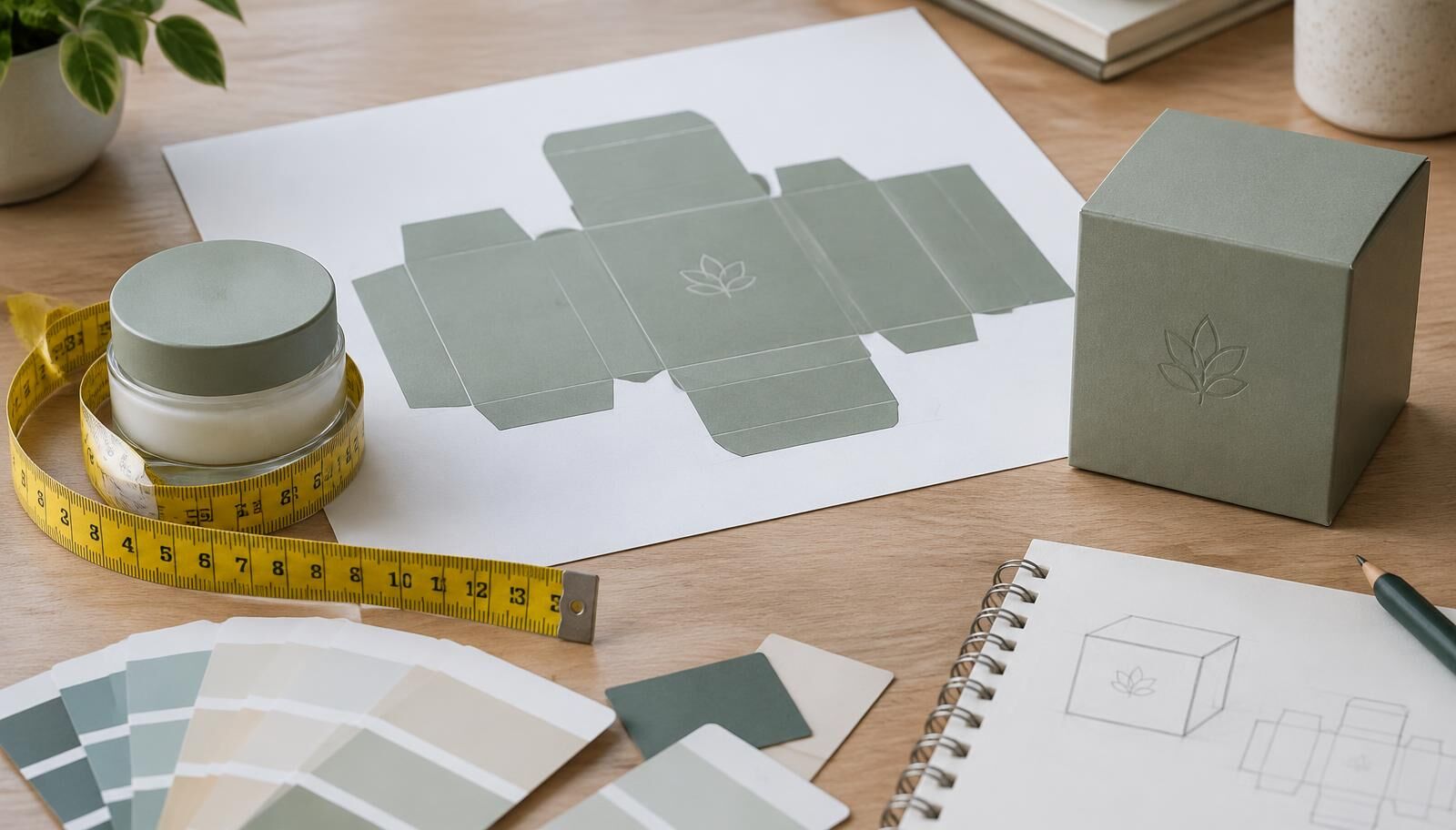
Measure the Product
Measure the length, width and height of the item at its widest points. Include caps, pumps, handles or anything that sticks out. Then allow a little clearance so the product slides in without forcing. Too much space, and it rattles. Too little, and the box bulges or won't close. Our size guide explains how to measure for the most common styles.
Pick the Structure and Inserts
Next, choose how the box opens and whether the product needs support inside. Glass jars, bottles and multi-item kits often benefit from an insert. A simple cardboard insert can stop movement and make the product look neatly placed when the lid opens.
Add Your Branding
This is where custom packaging boxes with logo printing come in. Keep the logo clear and easy to spot. Choose a small set of brand colors and use them consistently. Pick fonts that are easy to read at the size they'll be printed. Small text on a dark background is a common problem, so check it on a printed proof.
Remember the inside too. A short message or a pattern inside the lid can be a nice touch without adding much complexity. For tips on files, see our artwork guidelines.
Choose Finishes Carefully
Finishes change the look and feel. Matte gives a soft, modern look. Gloss makes colors pop. Effects like foil or embossing draw attention to a logo. Each one adds cost, so choose one or two that support your brand rather than stacking them all. You can compare options on our printing options and finishing options pages.
If you'd like to see a shape before you commit, try the Box Builder to explore styles and dimensions.
Custom Packaging Ideas for Different Products
The best ideas usually come from the product itself. Here are a few custom packaging ideas that work for common categories:
- Cosmetics and skincare: A slim paperboard carton with a clean front panel and a fitted insert for the jar or bottle. See our cosmetic boxes for styles.
- Candles: A sturdy box with an insert that keeps the glass from moving. A window or a printed scent label helps on the shelf. Browse candle boxes.
- Soap: A sleeve or small tuck-end carton that shows the bar and lists the ingredients. Our soap boxes guide covers this in detail.
- Supplements: A carton that fits the bottle closely and leaves clear space for required label information. Check supplement boxes.
- Bakery items: Boxes with windows or easy-open lids for cookies and cupcakes. Ask about suitable materials for direct food contact before ordering. See bakery boxes.
- Gift sets: A rigid box with a lid and a shaped insert for each item turns a set into a ready-made present.
For any regulated product, check your own labeling and safety rules. The box design should leave room for that information from the start.
Custom Packaging Boxes for Small Business
You don't need a huge budget to get professional packaging. Custom packaging boxes for small business owners are mostly about smart choices.
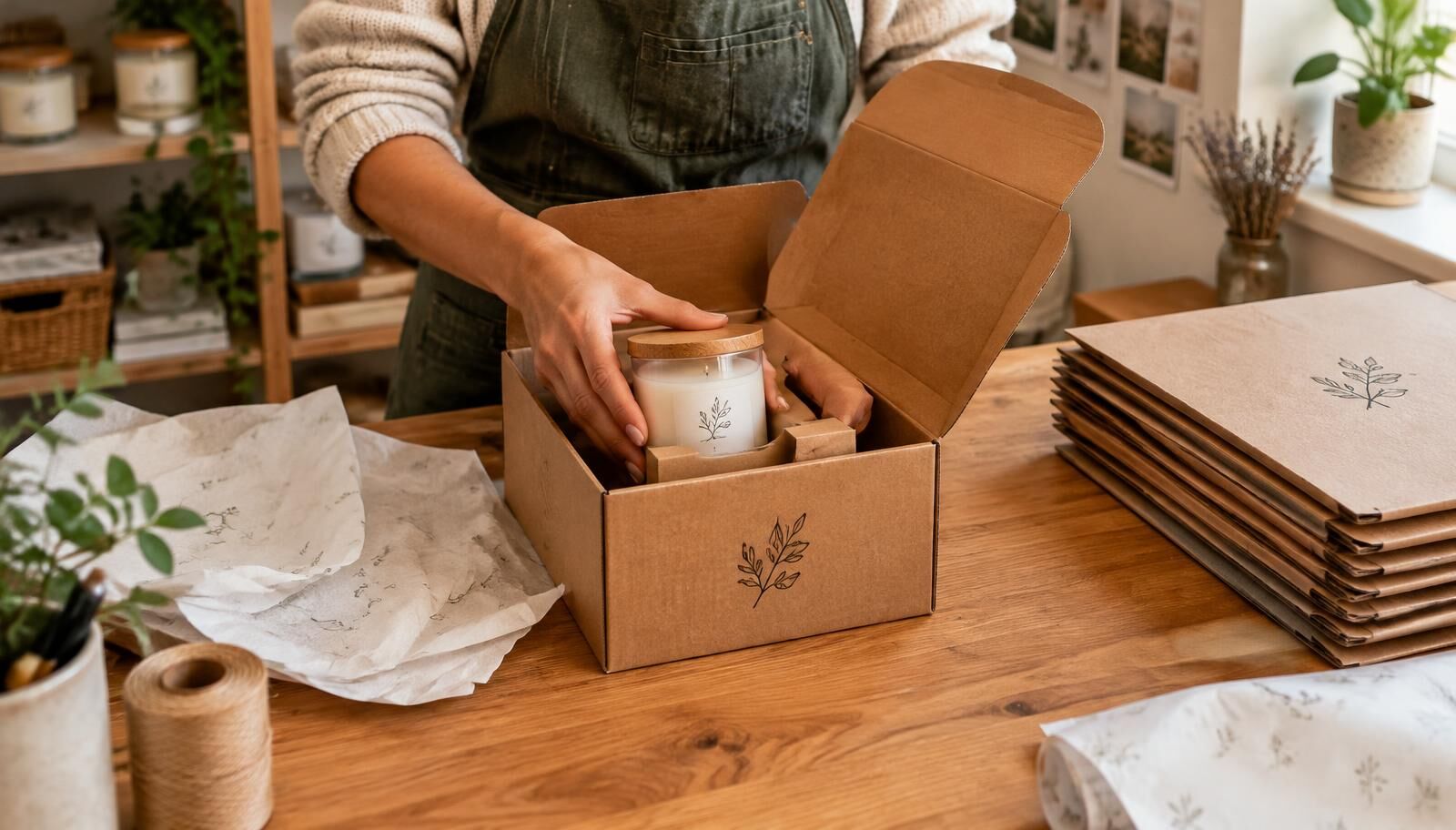
Start with fit and protection. A well-sized box that keeps the product safe matters more than fancy effects. Then keep the design simple. A strong logo, one or two colors and clean layout can look just as polished as full-coverage print, and it is often cheaper.
Order quantity matters too. At PackologyPro, the minimum order is 50 boxes, which lets smaller brands test a design before ordering larger runs. Per-unit prices usually drop as quantities go up, so it's worth asking for prices at a few different quantity levels.
A few more tips for small brands:
- Use one box size for several products where you can.
- Plan for storage space, since boxes arrive in cartons.
- Ask for a proof and review it carefully before production.
- Leave a little time in your schedule so you aren't rushing a reorder.
If you want a second pair of eyes on your artwork, our design support team can help.
How to Choose the Right Custom Box
If you're still unsure, work through these questions in order. Each answer narrows the options.
- What are the product's size and weight? This sets the dimensions and the board strength.
- Will it ship, sit on a shelf, or both? Shipping points to corrugated. Shelf display points to paperboard. Both may mean a retail box inside a shipper.
- How fragile is it? Glass and liquids often need an insert or extra protection.
- What should the opening feel like? A mailer, a tuck end and a lid box each give a different experience.
- How many do you need? Quantity affects price per box and how you store them.
- Is your artwork ready? Have your logo in a vector file and decide on colors and text.
- What's your budget per box? This helps you decide where to spend on finishes.
When you contact a supplier, share these answers. Good questions to ask in return: Which material do you suggest for this weight? Can I see a proof? How do prices change at higher quantities? Comparing custom boxes for packaging is much easier when every supplier is quoting the same specification.
Common Packaging Mistakes to Avoid
Most packaging problems are easy to prevent. Watch out for these:
- Measuring the wrong thing. Measuring the product but forgetting the cap or pump leads to boxes that don't close.
- Too much empty space. Extra room means more filler, more movement and a bigger shipping box.
- Weak protection. Using a thin carton for a heavy or fragile item in the mail invites damage.
- Hard-to-read artwork. Tiny text, low contrast and busy backgrounds make important details hard to find.
- Picking finishes first. Choosing foil and embossing before knowing your budget can push the price too high. Lock in size and material first.
- Skipping the proof. A quick review can catch spelling errors and color issues before thousands of boxes are printed.
How to Get Started with PackologyPro
If you're ready to explore options, here is a simple path. Look through the box styles to find a structure that suits your product. Use the Box Builder if you'd like to play with shapes and sizes. Then gather your measurements, quantity and artwork.
When you have those details, you can request a quote. Share as much as you know, even if some parts are still open. Our team will review your request and follow up with questions or pricing. If you'd rather learn more first, you can also read how custom packaging boxes help products stand out.
There's no pressure to have every answer up front. A clear starting point is enough.
Frequently asked questions
What information do I need to order custom packaging boxes?+
Have your product's length, width and height, the box style you like, the quantity, and your artwork or logo file. It also helps to say whether the box will ship, sit on a shelf, or both.
How do I choose the right box size?+
Measure your product at its widest points, including caps or pumps. Then add a small amount of clearance so it slides in easily without moving around. If you are unsure, ask your supplier to check the measurements.
What is the difference between paperboard and corrugated packaging?+
Paperboard is thin and smooth, so it prints sharply and suits retail cartons. Corrugated has a fluted middle layer that adds strength and cushioning, which makes it better for shipping and heavier items.
Can custom boxes include a printed logo?+
Yes. Your logo can be printed on the outside, the inside or both. Finishes such as matte, gloss, foil or embossing can make it stand out more.
Are custom boxes a good fit for small businesses?+
Yes. PackologyPro's minimum order is 50 boxes, so smaller brands can start with a modest run. Simple designs with one or two colors can keep costs lower while still looking professional.
How should I compare packaging quotes?+
Make sure every quote is for the same size, material, print and quantity. Then compare the price per box, what proofs are included, and how prices change at higher quantities.
Need packaging built to this spec?
Send us your product dimensions and quantity — we'll return a free dieline, a 3D mockup and itemized pricing within 24 hours.
Request a free quote